

What is a good emotional intelligence book? Which will help you understand and apply emotional intelligence? Do you also want your children to have some great reading steeped in EQ?
First, our top 12 recommended emotional intelligence books + neuroscience + learning in three sections: For everyone, at work, and for parents.
Next, Dr. Anabel Jensen, Six Seconds’ President, offers the best emotional intelligence books for adults and children — exploring concepts such as empathy, respect for self and others, optimism, pausing before acting, and the value of friendship for lifelong happiness.
Recommended Emotional Intelligence Books – For Everyone
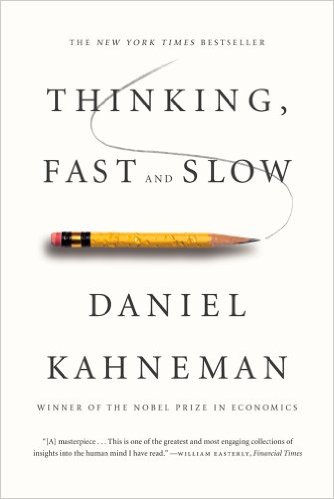
Thinking Fast, Thinking Slow by Daniel Kahneman
Why do we think the way we do, and why does that matter? In this compelling, profound, yet easy-to-understand work, Kahneman (psychologist and winner of the Nobel Prize in Economics) explains how we can use emotion to think and make better decisions.
“Brilliant . . . It is impossible to exaggerate the importance of Daniel Kahneman’s contribution to the understanding of the way we think and choose. He stands among the giants, a weaver of the threads of Charles Darwin, Adam Smith and Sigmund Freud. Arguably the most important psychologist in history, Kahneman has reshaped cognitive psychology, the analysis of rationality and reason, the understanding of risk and the study of happiness and well-being . . . A magisterial work, stunning in its ambition, infused with knowledge, laced with wisdom, informed by modesty and deeply humane. If you can read only one book this year, read this one.” ―Janice Gross Stein, The Globe and Mail
The Brain That Changes Itself: Stories of Personal Triumph from the Frontiers of Brain Science by Norman Doige
How do we actually learn and grow? In this revolutionary work, Dr. Doige unlocks the latest science showing that our brain is changing and growing – and that we can use that fact to direct our own neurology.
How Will You Measure Your Life? Clayton M. Christensen, James Allworth & Karen Dillon
A top Harvard Business School professor, Christensen delivered a stunning graduation speech telling high achieving MBAs that money doesn’t measure success… and unless we find the right way to measure progress, we’ll never reach our highest goals.
Let us remember: One book, one pen, one child,
and one teacher can change the world.
Some of Our Favorite Emotional Intelligence Books – At Work
Wired to Care (how companies prosper when they create widespread empathy) by Dev Patnaik and Peter Mortensen
In this essential and illuminating book, top business strategist Dev Patnaik tells the story of how organizations of all kinds prosper when they tap into a power each of us already has: empathy, the ability to reach outside of ourselves and connect with other people.
At the Heart of Leadership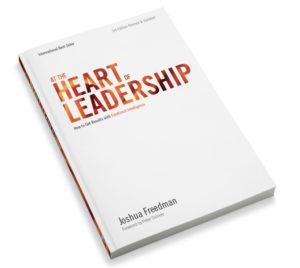 by Joshua Freedman
Unlike theoretical texts, this book offers a clear, powerful process to put emotional intelligence into action. There’s plenty of neuroscience and research, but it’s clear, readable, and practical. Though it’s written for a business audience, At the Heart of Leadership is an excellent way for anyone to learn “why EQ” and then numerous ways to see “how EQ” can become a practical toolset for positive change.
Your Brain at Work Strategies for Overcoming Distraction, Regaining Focus, and Working Smarter All Day Long by David Rock
“Simply put, this intriguing book offers fascinating research about the brain’s functions, limitations and capacities, and it teaches us how we can “direct” our own brain chemistry in order to achieve fulfillment and success. Well worth reading and ingesting these skills.” (Stephen R. Covey, author of The 7 Habits of Highly Effective People)
The Leader as a Mensch: Become the Kind of Person Others Want to Follow by Bruna Martinuzzi
This insightful and engaging book speaks volumes on ways in which all of us, at any level, can improve our leadership impact and develop the humility, integrity, and honor that instills hope and confidence in others. Drawing on over 25 years of leadership experience, Bruna Martinuzzi brilliantly conveys the essential guidelines for the emotionally intelligent leadership needed for enduring success.
The Vital Organization by Massimiliano Ghini & Joshua Freedman
The business climate has changed, so isn’t it time to update the basic “rules” of management? This intensely practical work distills a decade of cutting edge brain-based science into five revolutionary new rules for management. Built with compelling business logic, these rules provide a framework for creating a Vital Organization — where people are meaningfully engaged in doing the work that matters.
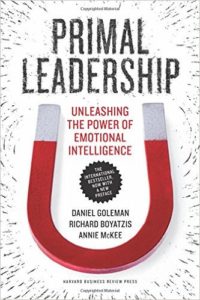 Primal Leadership: Unleashing the Power of Emotional Intelligence by Daniel Goleman, Richard E. Boyatzis, Annie McKee
This is the book that established “emotional intelligence” in the business lexicon—and made it a necessary skill for leaders.
The Emotionally Intelligent Manager: How to Develop and Use the Four Key Emotional Skills of Leadership by David R. Caruso and Peter Salovey
In The Emotionally Intelligent Manager, the authors show that emotion is not just important, but absolutely necessary for us to make good decisions, take action to solve problems, cope with change, and succeed.
DRIVE: The Surprising Truth About What Motivates Us by Daniel Pink
A powerful review of decades of science showing that the typical motivation schemes that companies use don’t actually work… and what can be done instead to fuel performance.
Emotional Intelligence Books – Parents & Teachers
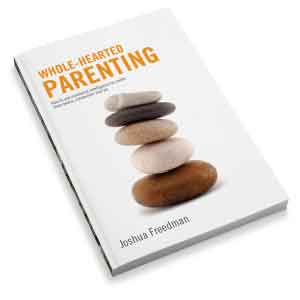
Whole-Hearted Parenting: How to use emotional intelligence to create more peace, connection, and joy by Joshua Freedman
“Josh Freedman offers parents sane and sound advice about how to raise good kids. Whole-Hearted Parenting is a reader-friendly, no-blame guide to parenthood that any mom or dad will find of great use – especially in those trying moments when it’s not clear what to do.”- Daniel Goleman, author of Emotional Intelligence
Raising An Emotionally Intelligent Child: The Heart of Parenting by John Gottman, Joan Declaire, and foreword by Daniel Goleman
Raising an Emotionally Intelligent Child is John Gottman’s groundbreaking guide to teaching children to understand and regulate their emotional world.
Teaching Kids to Be Good People: Progressive Parenting for the 21st Century by Annie Fox
“I wholeheartedly recommend ‘Teaching Kids to be Good People’ to any significant adult in children’s lives. This book offers guidance and practical advice to ensure that children are supported to become the best that they can be. The best not only for themselves but the best also for their families, schools, communities and the world!” —Sue McNamara
Six Key Lessons on Emotional Intelligence
With Anabel Jensen’s Six Best Emotional Intelligence Books for Children & Adults
I have gathered adult books that pair with the children’s books to go into more detail about each fundamental tenet of creating change.
So within this post you have six of my favorite books accompanied by a picture book to be shared with the children in your life — and correlated with the six key concepts that I believe are critical for success at home, at work, and at play.
This is a fabulous list of books you should read. Put them at the top of your ‘To Read’ pile, buy them using those unused Barnes and Noble giftcards, order them from the library. If you read no other books this year, read these.
Key Concept #1: Only change yourself
Concept: Change comes from within; it requires respect for self and others.
For adults – Switch: How to Change Things When Change Is Hard by Chip & Dan Heath
Change is hard. In those situations where change is hard, is it possible to align the emotional and rational systems of the brain? This book challenges us to think about how to align our purpose with our actions and emotions, including the latest research in neuroscience and psychology.
For children – Stand Tall Molly Lou Melon by Patty Lovell
Molly Lou Melon may be tiny, clumsy, buck-toothed, and with a voice “like a bullfrog being squeezed by a boa constrictor,” but she doesn’t mind. Her grandmother has utmost confidence in her, and tells her at every turn to believe in herself.
Key Concept #2: Don’t assume; ask
Concept: Don’t ever assume what the “other person” needs or wants. Try asking.
For adults – The Empathy Factor: Your Competitive Advantage for Personal, Team and Business Success by Marie Miyashiro
Building on the latest research in brain science, emotional intelligence, and organizational theory, an award-winning communication and organizational strategist answers questions about the true definition of empathy
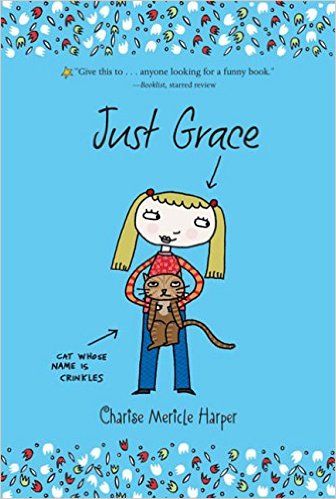
For children – Just Grace by Charise Mericle
The story of a precocious third grader whose super power is empathy, despite the many trials and tribulations she faces.
Key Concept #3: Take risks
Concept: To make something new requires doing something new, so be willing to fail, but never give up.
For adults – The Optimistic Child by Martin Seligman
The epidemic of depression in America strikes 30% of all children. Now Martin E. P. Seligman, the best-selling author of Learned Optimism, and his colleagues offer parents and educators a program clinically proven to cut that risk in half.
For children – Beautiful Oops by Barney Salzberg
A life lesson that all parents want their children to learn: It’s OK to make a mistake. In fact, hooray for mistakes!
Key Concept #3: Wait before deciding
Concept: To create change requires clear insight; Waiting improves thinking; become a “delay specialist.”
For adults – Wait: The Art and Science of Delay by Frank Partnoy
In this counterintuitive and insightful work, author Frank Partnoy weaves together findings from hundreds of scientific studies and interviews with wide-ranging experts to craft a picture of effective decision-making that runs counter to our brutally fast-paced world.
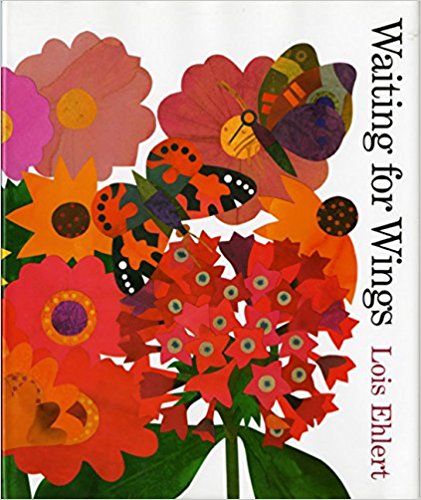
For children – Waiting For Wings by Lois Ehlert
A love poem to the beauty of the world, and of butterflies.
Key Concept #5: Know that hard work and character triumph over high-test scores
Concept: Genes are not a blueprint that predicts greatness for some and doom for the rest of us. Staying present, involved, and committed is what counts
For adults – The Genius In All Of Us: New Insights Into Genetics, Talent and IQ by David Shenk
DNA does not make us who we are. “Forget everything you think you know about genes, talent, and intelligence,” he writes. “In recent years, a mountain of scientific evidence has emerged suggesting a completely new paradigm: not talent scarcity, but latent talent abundance.” This is a revolutionary and optimistic message. We are not prisoners of our DNA. We all have the potential for greatness.
For children – Weslandia by Paul Fleishman
A boy creates a civilization in his suburban backyard. WESLANDIA honors the misfits—and the creators—among us.
Key Concept #6: Friends are more important for long life and happiness than any other element
Concept: The higher both the quantity and quality of your relationships, the longer you will live and the more you will thrive.
For adults – Brain Rules for Baby: How to Raise a Smart and Happy Child by John Medina
“We recommend this book to all of our new-parent groups. With a gift for storytelling, Dr. Medina marries the science with practical advice that helps make sense of it all. Sleep-deprived parents still find time to read Brain Rules for Baby and love it.”
– Laura Kussick, Executive Director, Program for Early Parent Support
For children – Don’t Need Friends by Carol Crimi
Great for K-3, this book is all about friendship, the pain of losing it, and the emotions involved with making new friends.
If you have a child, I recommend you read these books together and talk about the messages inherent within them. Discuss what the message means for your own life and share that with your child. And listen carefully to what s/he has to say about his or her own interpretation of the message contained within the book both for his/herself and his/her thoughts on your sharing.
If you don’t have a child, read them anyway. We can all play, have fun and take the message on board via these means. Great insights are to be had in just minutes. Think about the characters, the plot, what the take-away is for your own life. Bring some fun to the process, write down your thoughts, apply the lesson.
These books are correlated with the 6 Surprisingly Simple Ways to Change The World that I believe are critical for success at home, at work, and at play. Enjoy!

What are the best books to read with your children? Here are some favorites, organized around six essential life lessons for creating change.

- 87 Ways to Be Kind and Loving - June 27, 2022
- 13 Tips to Reduce Stress & Anxiety During Covid-19 - April 8, 2021
- 6 Tips for Making the Best of Your Reality - October 12, 2020