

What Are Emotions? Understanding the Science and Meaning Behind How We Feel
Emotions are messages. They exist to tell you something important. Understanding what emotions are, why we feel them, and how to use them is the foundation of emotional intelligence. This post explores the neuroscience of emotions – with input from some of the world’s top experts on emotions and practicing emotional intelligence.
What you’ll find on this page
➔ Emotions Are Part of Our Biology
➔ Emotions Are Messages
➔ Experts Weigh in on Emotional Intelligence
➔ We Feel Multiple Feelings
➔ Emotions Change, Combine & Evolve
➔ Emotions Are Contagious
➔ How to Practice Emotional Intelligence
Emotions Are Part of Our Biology
Emotions are chemicals that help your body and brain work together. In the brain, the chemicals of emotion are intertwined with the chemicals of thought. It might be convenient to pretend emotions don’t exist – but they influence every aspect of our thinking and behavior. Leading neuroscientist Antonio Damasio put it simply:
“Emotions are enmeshed in the neural networks of reason.”
There’s even a tiny “factory” in your brain—the hypothalamus—that helps assemble emotion chemicals from small protein strings called peptides. These chemicals travel through your brain and body, delivering messages to help you adapt and respond and signaling your body to prepare for opportunity or threat. They also help regulate basic functions like heart rate, blood flow, digestion, immunity, muscle response, and even body temperature.
Each emotion chemical lasts about six seconds as it courses through your system, delivering its message and then being recycled. (That’s where our name comes from!)
Emotions affect every living cell in your body – and your body, in turn, influences your emotions. It’s a continuous, two-way communication system between body and mind.
Emotions Are Messages
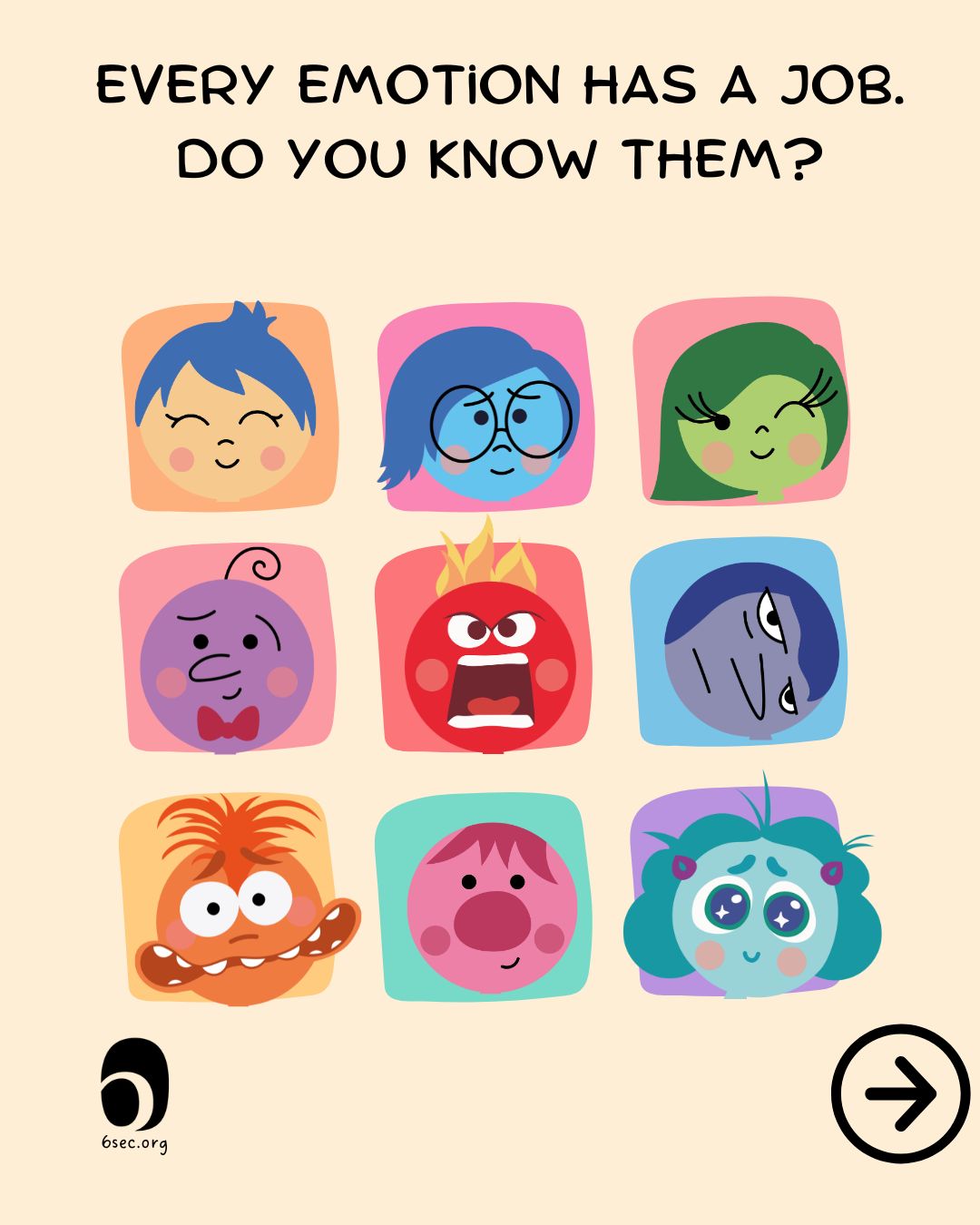
Every emotion you feel has a job to do. Each one:
Focuses your attention on an opportunity or a threat.
-
-
Joy asks: “Are you noticing how great this is?”
-
Fear asks: “Are you noticing this danger?”
-
Energizes you to take action—to move toward or away from what matters.
-
Joy motivates us to approach, to step closer to opportunity.
-
Fear motivates us to step back, to protect ourselves from risk.
Each feeling is a form of data. When you listen, it offers valuable information about what’s happening inside you and around you. Learning to interpret those messages is the heart of emotional literacy.
Experts Weigh In: What Are Emotions, Really?
Across decades of research, emotion scientists and educators have described emotions in different – yet overlapping – ways.
Maurice Elias, Ph.D.
“Emotions help keep us on the right track by making sure that we are led by more than cognition.”
Elias calls emotions our most reliable indicators of how things are really going in our lives — a kind of internal guidance system that integrates reason with intuition.
Candace Pert, Ph.D.
“Emotions are the glue that holds the cells of the organism together.”
A pioneer in psychoneuroimmunology, Pert discovered the molecules of emotion – the neuropeptides that link mind and body. Her research shows that emotions aren’t just in your head; they live throughout your entire system.
Anabel Jensen, Ph.D.
“There are a hundred or perhaps a thousand other emotions, or gradations, created by the mixing, blending, and overlapping of the basic ones.”
Jensen, President of Six Seconds, describes emotions as byproducts of living and learning. She sees three primary emotional “colors” — ecstasy, terror, and despair — that blend into thousands of emotional shades, like an artist’s palette.
Jack Mayer, Ph.D.
“There are emotions which are more biologically oriented and then there are complex emotions which are saturated with thoughts and cognition.”
Co-creator of the term emotional intelligence, Mayer emphasizes that emotions bridge thought, feeling, and action. They’re not separate from reasoning – they’re the fuel that powers it.
Karen McCown
“Our emotions are shaped by our beliefs — by what we tell ourselves.”
McCown, founder of Six Seconds and The Nueva School, reminds us that we create our emotions. Our responses arise from how we interpret events, and that awareness gives us the power to choose how we want to show up.
Read on below for more insights from these emotion experts.
Before you read on, we thought you might like to download our free Practicing EQ eBook. These evidence-based exercises will not only enhance your ability to understand and work with your emotions, but will also give you the tools to foster the emotional intelligence of your clients, students or employees.

We Feel Multiple Feelings
At any given time, your brain and body are producing many emotion chemicals simultaneously. These “bursts” of emotion communicate with each other and shape your state of mind.
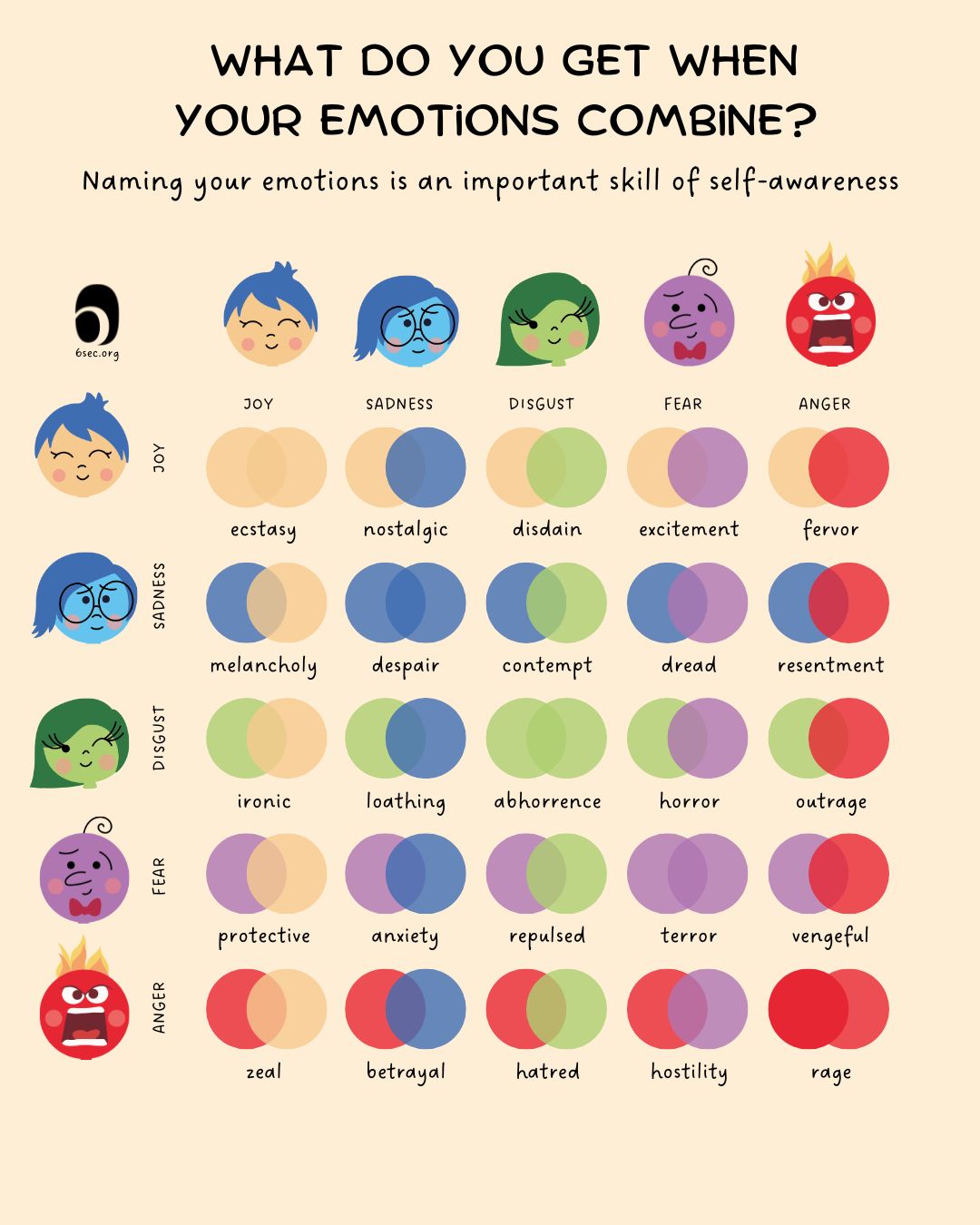
That’s why you can feel both anxious and excited before a big presentation, or both sad and grateful after saying goodbye to someone you love. Emotions rarely happen in isolation—they’re a complex, ever-changing mix.
Even though each burst lasts about six seconds, new ones are constantly being produced. So, on some level, we are always feeling something.
One question we love to ask at Six Seconds: What are you feeling? And what else?
Emotions Change, Evolve & Combine
Now that you know the basics of emotion chemistry, let’s look at how emotions interact in real life.
Three facts about emotions:
1. We feel emotions at different intensities.
A subtle unease isn’t the same as overwhelming panic, but they live on the same spectrum.
2. We have many words for emotions.
A rich vocabulary helps us articulate nuanced states and patterns.
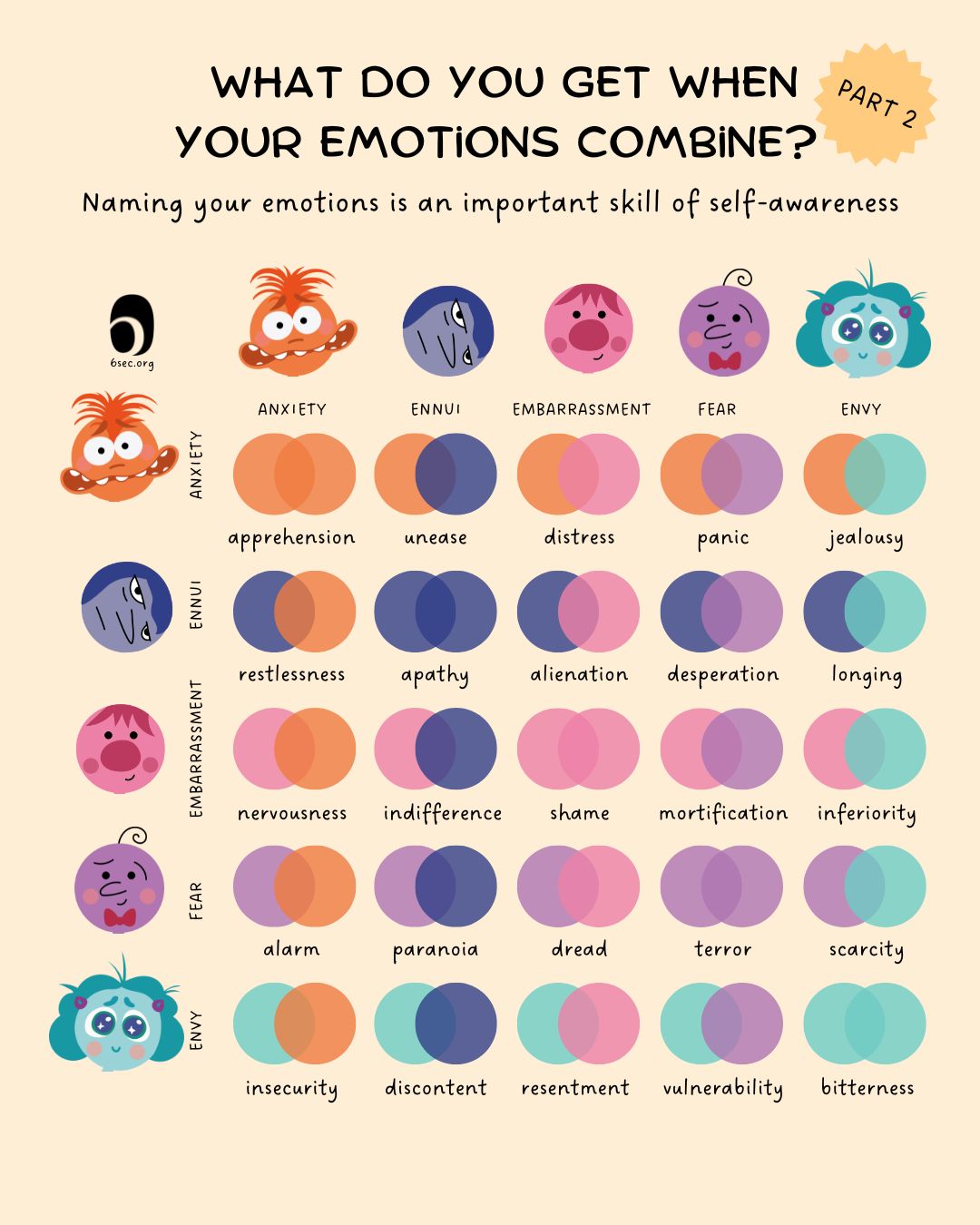
3. We feel combinations of emotions.
Complex moments often include layered, even conflicting, feelings that don’t cancel out — they stack.
For a visual guide to how emotions blend and transform, explore Plutchik’s Wheel of Emotions.
Emotions Are Contagious
Emotions are also social signals. They spread through tone of voice, facial expression, posture, and energy. We unconsciously “catch” emotions from others—especially from people we’re close to or who hold authority.
This means our emotional states ripple outward. A calm, grounded leader can stabilize a team; a stressed or fearful one can amplify anxiety. Emotional contagion is part of what makes empathy, trust, and leadership so powerful—and so necessary.
More Insights from the World’s Leading Emotion Experts
John D. (Jack) Mayer, a researcher who in partnership with Peter Salovey provided the first formal definition and experimental measurement of “emotional intelligence,” explains: “Although scientific language is often precise, sometimes it may be left more open-ended, because we scientists recognize as a group that we don’t have final answers to questions like, ‘what is an emotion?’ or ‘what is a feeling?’ or ‘what are core emotions?'”
“Different researchers,” Mayer continues, “define emotions differently. There are biologically-oriented researchers who define emotions as very close to simple biological states, or electro-chemical reactions. There are psychologists who define emotions as conscious experience. Most people who study emotions are somewhere in between and they view emotions as a coordinated response system, so that an emotion occurs when there are certain biological, certain experiential, and certain cognitive states which all occur simultaneously.”
In other words, emotions operate on many levels. They have a physical aspect as well as a psychological aspect.
According to Mayer, there is evidence that emotions are a motor activity as well. Emotions, then, bridge thought, feeling, and action – they operate in every part of a person, they affect many aspects of the person, and the person affects many aspects of the emotions.
As researchers work to identify the core emotions, the lists vary depending on the researcher’s area of focus. Some lists focus on chemicals, some on facial expressions, some on cross-cultural similarities, some on behaviors. In general, researchers agree that there are different kinds of emotions/feelings. Mayer: “There are emotions which are more biologically oriented and then there are complex emotions which are saturated with thoughts and cognition. For example, a more basic-like emotion would be simple sadness, whereas a more cognitively-saturated emotion would be something like guilt, where usually you have to have learned something in order to feel the guilt.”
Maurice Elias, Ph.D.
Coauthor of Emotionally Intelligent Parenting, Promoting Social and Emotional Learning, and a professor of education at Rutgers University.
What are emotions? Emotions are human beings’ warning systems as to what is really going on around them. Emotions are our most reliable indicators of how things are going in our lives. They are also like an internal gyroscope; emotions help keep us on the right track by making sure that we are led by more than cognition.
If you have a list of core emotions what are they? There are more emotions that we feel than we can label. Emotions are fundamentally not cognitive/verbal, so as soon as we try to name them, we begin to be cognitive instead. When we start to talk about emotions, we’re losing some parts of them. In our curricula, we encourage our kids to develop as broad a feeling vocabulary as possible so kids can express themselves. But for some kids, when you say “how did that feel?”, the answer is, “that feels like the time when I got lost at the mall.” And you can’t capture that time by saying, “I was scared.” That feeling and that event and that situation are all wrapped up together.
What is the difference between emotions and feelings? I have no idea (with a laugh) and you can quote me!
Candace Pert, Ph.D.
Author of Molecules of Emotion and Everything You Need to Know to Feel Go(o)d and a research professor at the Georgetown University Medical Center.
What are emotions? Emotions are the glue that holds the cells of the organism together in the material world, and in the spiritual world they’re the glue that holds the classrooms and the society together. That’s why they are so interesting, because they’re on a material level – the molecules of emotion as I’ve studied them as a scientist – and they’re in the spiritual realm as well.
When you talk about emotions, do you use a list of “core emotions”? For me the key principle is that each emotion probably has a chemical that is in many parts of the body and the brain, so you can’t think that the body is there just to carry the head around. So learning has to address the whole child.
[Here is an interview with Dr. Pert on her book, Everything You Need to Know to Feel Go(o)d where she provides much more detail about the neurobiological function of emotion and the power of bliss to teach us what’s most important]
Anabel Jensen, Ph.D.
President of Six Seconds, coauthor of Self-Science and Handle With Care, and a professor of education at Notre Dame de Namur University.
What are emotions? Emotions are generated in the brain and the brain drives the body. So I agree with Epictetus who stated, “We are disturbed not by things, but by the views we take of things.” So first we think, then we feel, and then we act. And I think love, guilt, hate, happiness, anger – all the feeling-states – are byproducts of the actions we take. So love of a child comes from the exhilaration and excitement of the miracle of birth, plus the immeasurable hours of nurture, care, and service to his/her growth and development.
If you have a list of core emotions what are they? I am a minimalist. There are three essential or primary emotions. Ecstasy, terror, and despair. And then there are a hundred or perhaps a thousand other emotions, or gradations, created by the mixing, blending, and overlapping of the basic ones. I like the metaphor of an artist’s palette where from three basic colors s/he creates almost innumerable variations and shades depending on how the portions of each color are mixed. So “angry” is a blend of terror and despair. If anger is a deep vermillion, then irritation is a blushing shade of red.
What is the difference between emotions and feelings? Emotions are the raw material. They come with the DNA package. Feelings are the interpretation of the raw data given by the brain and reinforced by the individual’s culture.
Jack Block, Ph.D.
Professor of psychology at UC Berkeley and the director of the Block Project, a longitudinal study of child development.
What are emotions? I think the basic emotion is anxiety and that one tries to avoid anxiety, in various ways.
If you have a list of core emotions what are they? I do not have a list of “core” emotions although many exist, those by Paul Ekman and by Richard Lazarus being well known. They take a “horizontal” view of emotions; I prefer to think of them as hierarchically organized, with the differentiated negative emotions serving, mostly, to reduce anxiety. The positive emotions (when they do not serve as relief from anxiety) serve a different life zest that appears mostly when anxiety is not preemptive. I do not see any deep difference between emotions and feelings except that, definitionally, one might want to make feelings conscious and be non-committal about the consciousness of emotions.
John Steinberg
Author and educator in Sweden. His 26th book is about redefining schooling in the information age; visit www.steinberg.se.
What are emotions? Key emotions, as I see it, are disappointment, fear, and the longing for self-worth. We may long for love, but isn’t love simply an affirmation of our need for self-worth? When we don’t feel appreciated or affirmed we become disappointed. This in turn becomes anger and may turn to fear. Most negative behavior is the outgrowth of not feeling self-worth. It is not the child who feels good about him or herself that acts out destructively against the world. Perhaps the most valuable gift a parent can give the child is a feeling of value. Unconditional love is truly hard to give, yet each condition put on love leads the child to question him or herself.
Every time we affirm the child’s right to feel what he or she feels we help build a positive base for the future. Every time we tell the child that he or she is okay whatever disappointment we feel at a specific action, we affirm a sense of value. We all make mistakes as parents, friends, and as young people growing up into an increasingly uncertain world. We use sarcasm. We send guilt. We ignore. But there are magical moments as well. We listen. We see. We affirm. We encourage and show that we care. It is so we give hope for the future where children will learn self-respect knowing their value for themselves, others, and their world.
Karen Stone McCown
Chairman and Founder of Six Seconds, the Founder of the Nueva School, and author of Self-Science.
What are emotions? Emotions are our responses to the world around us, and they are created by the combination of our thoughts, feelings, and actions. What is most important is for each of us to learn that we create our own emotions. Our responses are shaped by our thoughts – by what we tell ourselves. As we clarify our understanding of our own beliefs and patterns, we learn that we are actually choosing our own lives. We take responsibility for our thoughts, feelings, and actions; we become accountable.
J-P Du Preez
Organizational consultant and a Senior Lecturer at Potchefstroom University, South Africa.
What are emotions? Emotions originate from exposure to specific situations. The nature and the intensity of the emotion are usually related to cognitive activity in the form of the perception of the situation. That thought process or perception results in the experience and/or the expression of a related feeling.
If you have a list of core emotions what are they? A number of researchers (e.g., Ekman & Friesen, Izard, and others) have isolated certain core emotions that are evident among all cultures. Ekman & Friesen have identified six basic emotions: happiness, sadness, surprise, disgust, anger, and fear. Fascinating, though, is the occurrence of only one positive emotion (happiness) on the list of core emotions! Let’s allow ourselves to feel whatever we want to feel – why restrict it to only six options of which five are negative? Due to the close link between emotional experience and creativity I believe there is a wide variety of possible emotional responses to different situations.
What is the difference between emotions and feelings? A feeling is the response part of the emotion. Emotion is an “umbrella term” which includes the situation, the interpretation/perception of the situation and the response or feeling related to the perception of the situation.
Eric Jensen, Ph.D.
Author of The Learning Brain, Brain-Based Learning, director of Jensen Learning, and a co-founder of SuperCamp; online at www.thebrainstore.com.
What are emotions? Biologically driven, cross-cultural responses to environmental stimuli.
If you have a list of core emotions what are they? Anger, sadness, disgust, surprise, joy and fear.
What is the difference between emotions and feelings? Emotions are cross cultural – the same all over the world. Feelings are a subset of all of our mind-body states (disappointment, hunger, hope, etc. There are hundreds of them!). Feelings are a learned response in the culture in which you grow up (the family, the peers, the community, etc.).
The huge set has ALL mind/body states, then feelings, emotions, thoughts and moods are all subsets of that huge set of life states.
How to Practice Emotional Intelligence
Emotions are not problems to solve – they’re information to use. By building emotional intelligence, we can understand what emotions are telling us and use that insight to make better choices.
The Six Seconds Model of EQ offers a simple process:
-
Know Yourself: Increase awareness of what you’re feeling and why.
-
Choose Yourself: Respond intentionally instead of reacting automatically.
-
Give Yourself: Use your emotions to create purpose and connection.
Ready to practice? Explore How to Develop Emotional Intelligence for research-based steps you can take today.
Emotional Intelligence Resources
Explore these resources to learn more about emotions and emotional intelligence:
🔍 Download the Practicing EQ eBook
A beautifully designed, 44-page guide with activities, reflection questions, and worksheets to help you put EQ into action — personally and professionally. Get your free copy →
📅 Join a free, live webinar
Explore EQ topics with global experts in real time. These sessions are interactive, practical, and free to attend.
Save your spot →
👨🏽💻 Subscribe to our free weekly newsletter
The latest research on psychology and neuroscience. No SPAM. Unsubscribe anytime.
Send me amazing content →
🌍 Read the latest State of the Heart Report
Learn from the world’s largest study of emotional intelligence — with insights from over 200,000 people across 200+ countries. Understand the latest research →
Whether you’re new to emotional intelligence or a seasoned practitioner, these free tools are here to help you grow.
Download the Free Practicing EQ eBook
Want to learn more about emotions and emotional intelligence? Get your free 44-page eBook to explore Plutchik’s Wheel of Emotions and how you can use it to start practicing emotional intelligence.
What’s included:
- Free Plutchik Wheel of Emotions poster for your office or classroom
- Dozens of activities and exercises to practice emotional intelligence
- Dozens of words for feelings to grow your emotional literacy

Frequently Asked Questions (FAQs) about Emotions
What exactly are emotions?
Emotions are biological signals that combine thoughts, feelings, and physical sensations. They’re your body’s way of communicating information about opportunities or threats — helping you focus attention and take action.
Why do we feel emotions?
We feel emotions because they help us survive and thrive. Emotions motivate behavior, strengthen relationships, and help us make decisions. Without them, we’d struggle to prioritize or find meaning.
How are emotions different from feelings or moods?
-
Emotions are quick, physiological responses — your body’s instant data system.
-
Feelings are how you interpret those emotions; they’re shaped by your thoughts and experiences.
-
Moods last longer and often have no clear trigger — think of them as the emotional “weather” that colors your day.
Read more about the difference between Emotions, Feelings and Moods.
Where do emotions come from in the brain?
Emotions begin deep in the brain’s limbic system, especially in areas like the amygdala and hypothalamus. These regions create emotion chemicals (peptides) that travel through the body to regulate heart rate, digestion, immunity, and other systems.
How long does an emotion last?
Each burst of emotion chemicals lasts about six seconds before it’s recycled — which is where Six Seconds gets its name. Of course, new emotions arise constantly, creating an ever-changing emotional landscape.
Can we have more than one emotion at a time?
Yes. Human beings almost always feel multiple emotions simultaneously. You can be both excited and nervous, joyful and sad. Emotional intelligence helps us decode and understand these mixed emotions.
Are emotions universal across cultures?
Many basic emotions — like joy, fear, anger, sadness, disgust, and surprise — appear across all cultures and are expressed similarly through facial expressions and body language. However, how we interpret and express them varies depending on culture and context.
What are the primary or basic emotions?
Researchers have proposed different lists of “core” emotions. Psychologist Paul Ekman identified six (happiness, sadness, anger, fear, disgust, surprise). Others, like Robert Plutchik, described eight (joy, sadness, trust, disgust, fear, anger, surprise, anticipation). These blend into hundreds of emotional variations.
Can you control your emotions?
You can’t stop emotions from arising — but you can choose how to respond. That’s the essence of emotional intelligence: noticing what you feel, understanding why it’s happening, and deciding how to use that data wisely.
Why do some emotions feel so overwhelming?
Strong emotions flood the body with energy. When the emotional brain is highly activated, it can override logical thinking. Practicing mindfulness and emotional regulation skills can help you stay centered during intense emotional moments.
How can I become more emotionally intelligent?
Start by naming your feelings — research shows that labeling emotions helps calm the brain. Then practice pausing before reacting and reflecting on what each emotion is trying to tell you. For practical steps, see How to Develop Emotional Intelligence.

- Emotions Travel in Packs: What Your Feelings Are Really Trying to Tell You (The Emotion Constellation Map) - March 23, 2026
- Leading Change in Times of Uncertainty: Why Managing Transitions Matters More Than Strategy - December 28, 2025
- Emotion AI: A Leader’s Guide to Use Emotional Intelligence for Effective AI Adoption and Change Management - December 2, 2025