


Should I Stay or Should I Go?
Understanding Your Emotional Needs
by Patty Freedman
My friend emailed again this week inviting me to Quiz Night. “It’s a lot of fun,” she wrote, “and I could really use your help, especially with the pop culture questions.”
I stared at the screen. She’d asked before—several times, actually—and I’d always found a reason to say no. Too busy. Too tired. Already committed. And here she was, asking again.
Part of me didn’t want to let her down. One of these days she’d stop asking, and then where would I be? I think about all the research showing that the key to a healthy, long life is in the relationships we cultivate along the way. I’m such a homebody, an introvert who finds comfort in my routines—my books, my neighborhood walks, my alone time. Since the pandemic, really have to make an effort to see people.
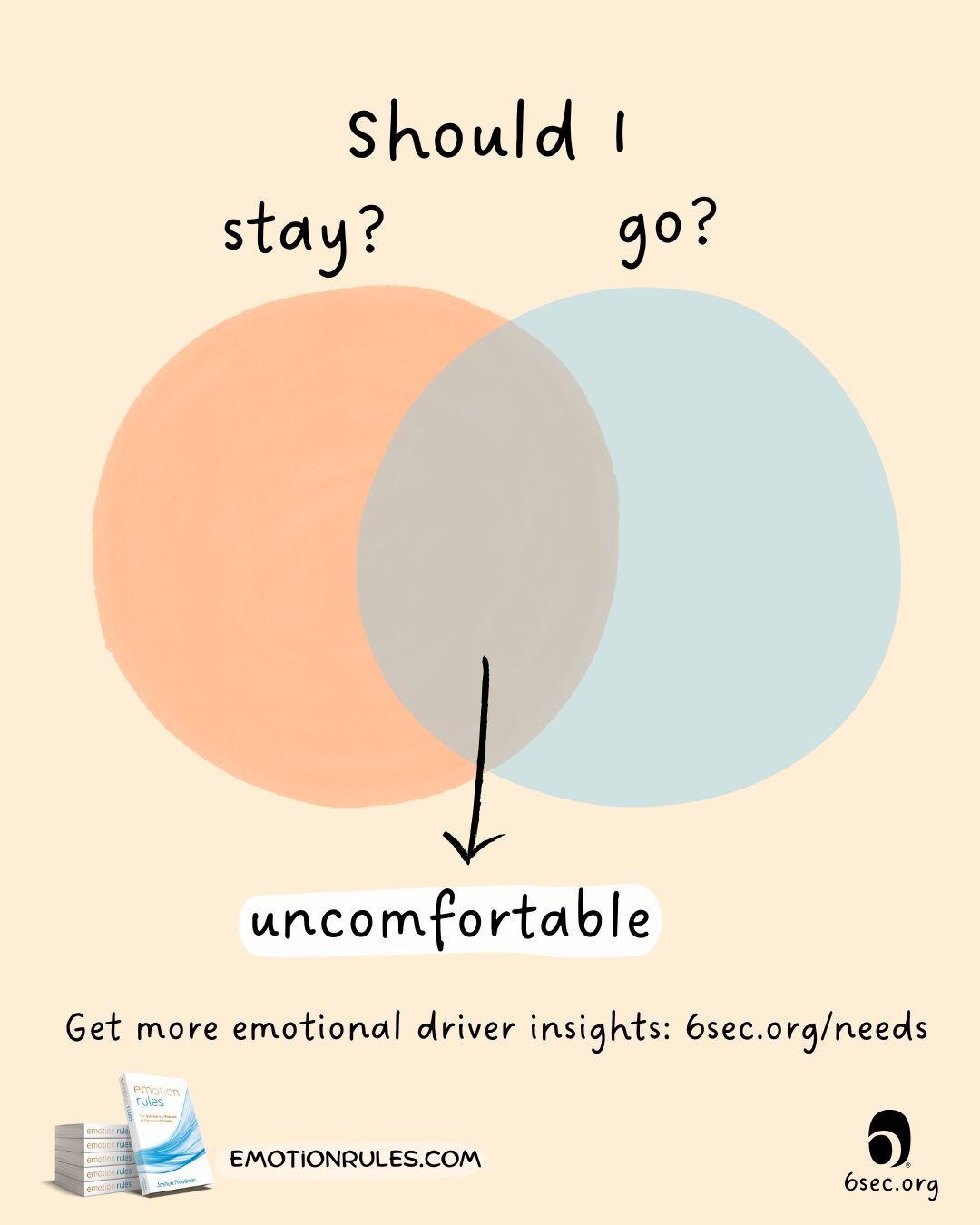
So I have these two needs pulling at me: Autonomy and Belonging. How do I resolve them?
That’s the question I sat with.
And it’s the wrong question.
The Signals Beneath the Surface
For so many years, I shaped my life around raising my children, caring for our home, making others’ wellbeing a priority over my own. But in the last ten years, since my youngest left home, my life has become dramatically different. I appreciate the changes. I really love the autonomy I have now—at work, at home, in how I spend my time.
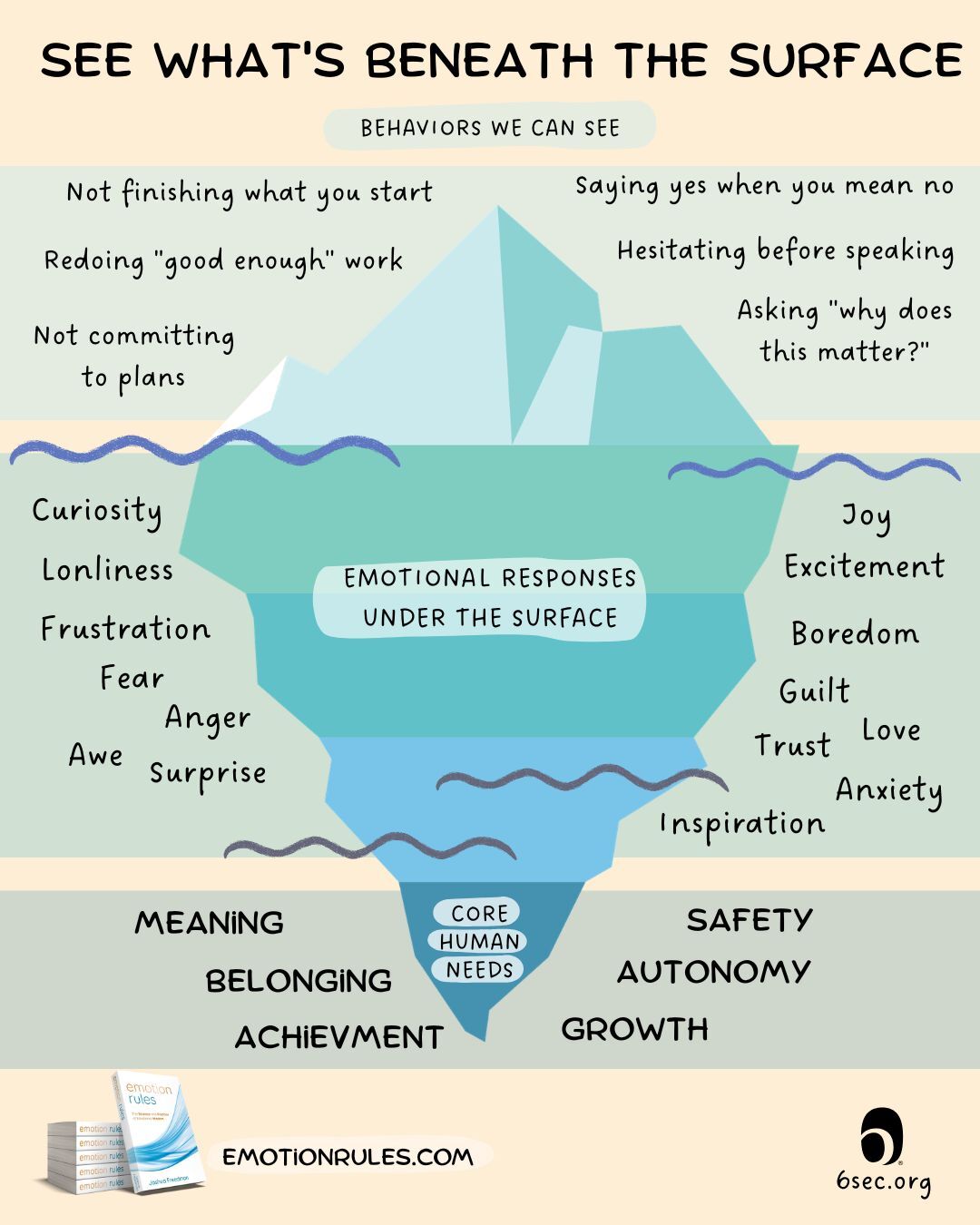
But there’s this perceived effort when I’m invited to go out with friends. I’m non-committal. I’m often “too busy.” And at the very same time, I know I want to be in relationships. Sometimes I feel isolated when I haven’t seen them.
What’s happening here? Am I being selfish? Antisocial? Am I prioritizing the wrong things?
No. I’m human. And my emotions are doing exactly what they’re designed to do: signaling me to notice something important.
So with my questions at hand, I checked out the new Emotion Constellation Map to explore the emotions that were underneath and the messages they carried. Like reading the stars, I hope that learning more about them could help guide me in the right direction.
Your Brain’s Emotional Guidance System
Deep in your brain sits the limbic system—an ancient network of structures that evolved to keep you alive and help you thrive. The amygdala scans for what matters. The hippocampus links emotions to memories and meaning. The hypothalamus connects your emotional state to your body’s physical responses.
Together, these structures generate what neuroscientists call “motivational salience”—your brain’s way of saying pay attention to this. When the limbic system detects that something significant is at stake, it creates emotions. Not random ones. Specific emotional signals tied to specific needs.
This insight forms the foundation of psychologist Marshall Rosenberg’s groundbreaking work on Nonviolent Communication. Check out his explanation in this video. Rosenberg proposed that every emotion we experience connects to whether our fundamental human needs are being met or unmet. When we feel anger, fear, joy, or loneliness, we’re receiving information about what matters to us.
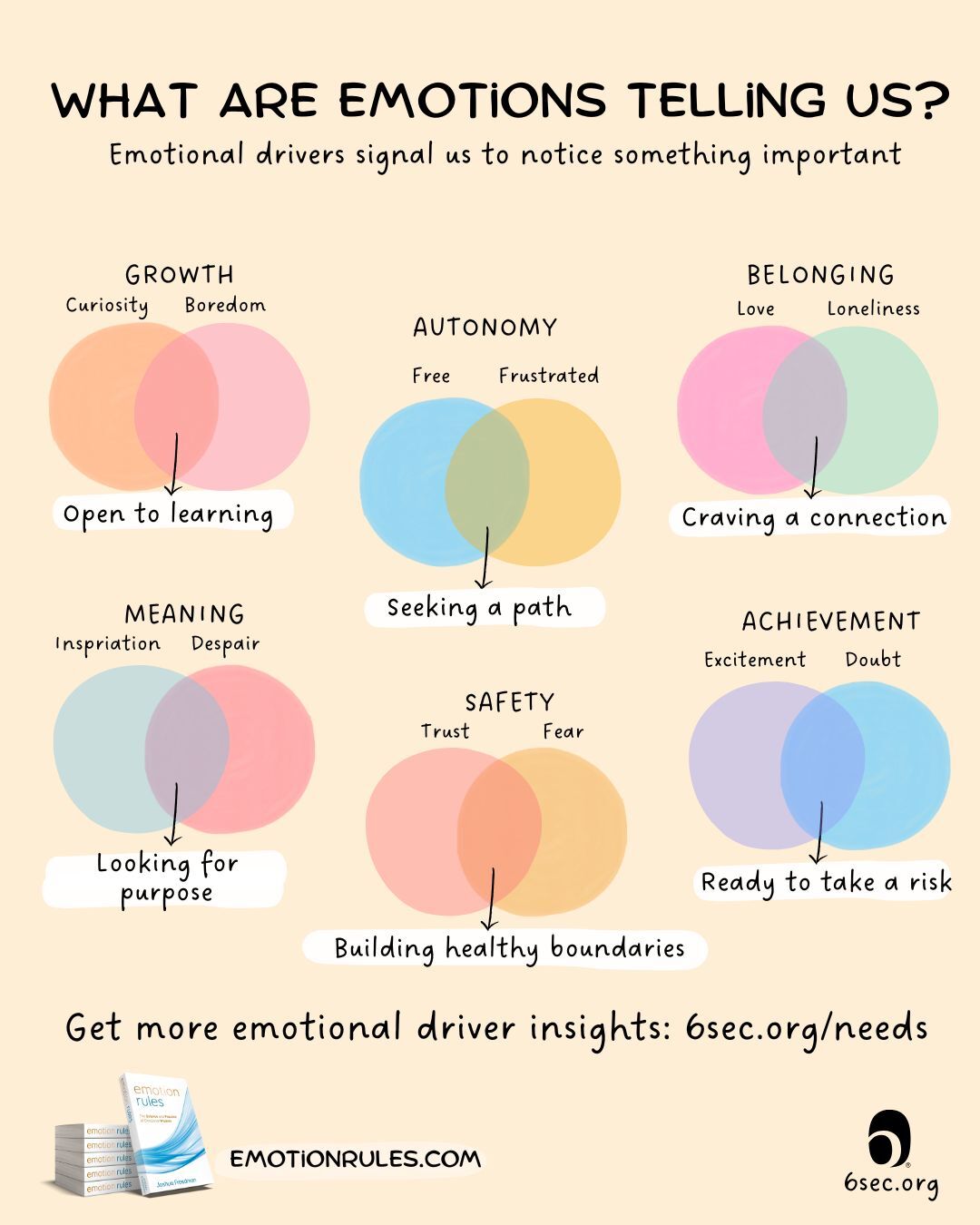
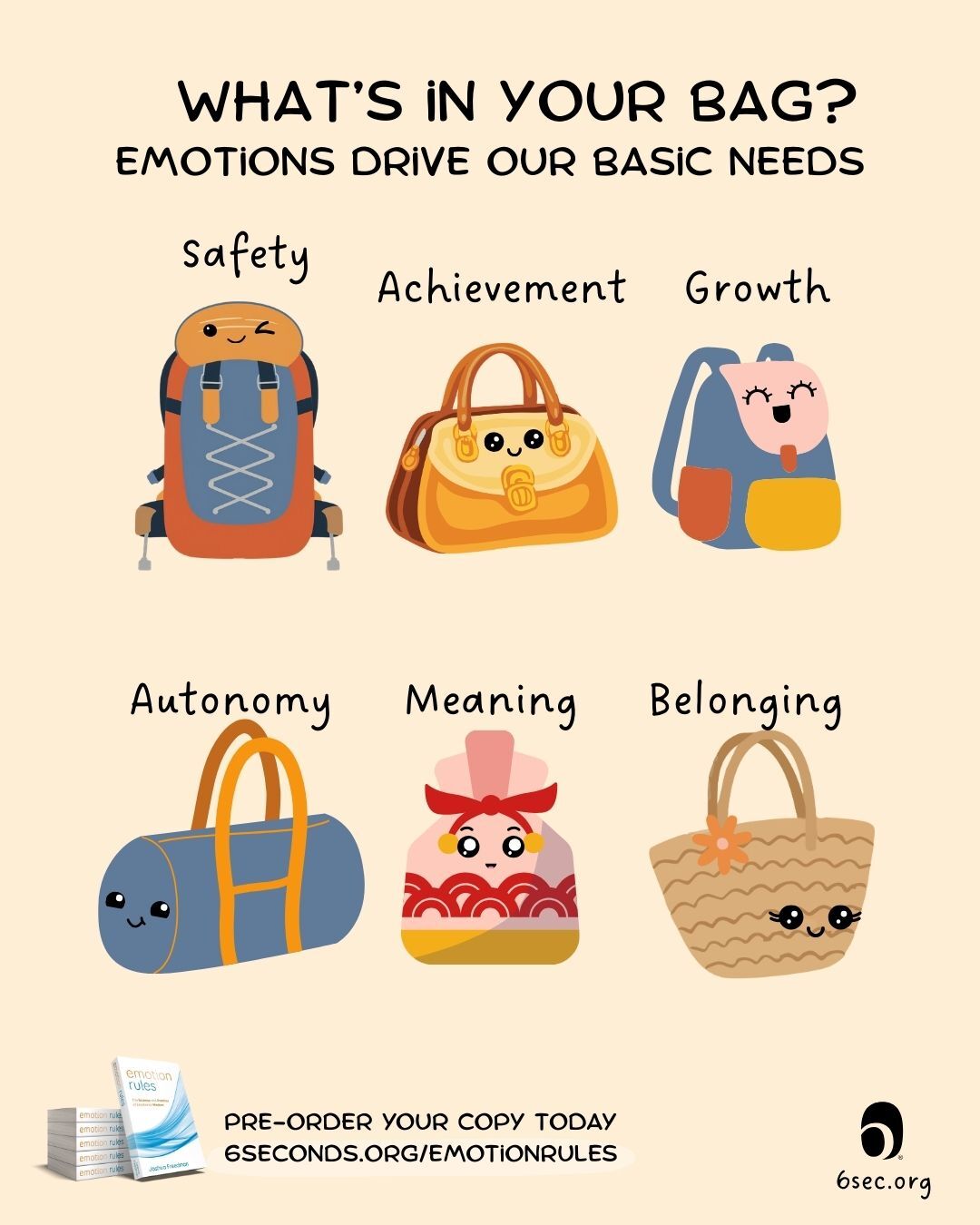
Building on the work of Abraham Maslow and Marshall Rosenberg, Joshua Freedman identifies six basic drivers—core human needs that generate our emotional landscape: Safety, Belonging, Achievement, Autonomy, Meaning, and Growth. Each need has its own cluster of feelings that act as messengers.
When I look at my Quiz Night dilemma through this lens, something shifts. I’m not experiencing competing desires that I have to resolve by choosing one over the other. I’m experiencing two valid needs, both asking for my attention.
Unwinding the Feelings
Here’s the practice Joshua describes in Chapter 4 of Emotion Rules: Wholeness—Beyond Opposites. Instead of treating emotions as problems to solve or contradictions to resolve, we can learn to unwind them. To trace each feeling back to the need it’s pointing toward.
When I notice that perceived effort about going to Quiz Night, I can ask: What need is speaking?
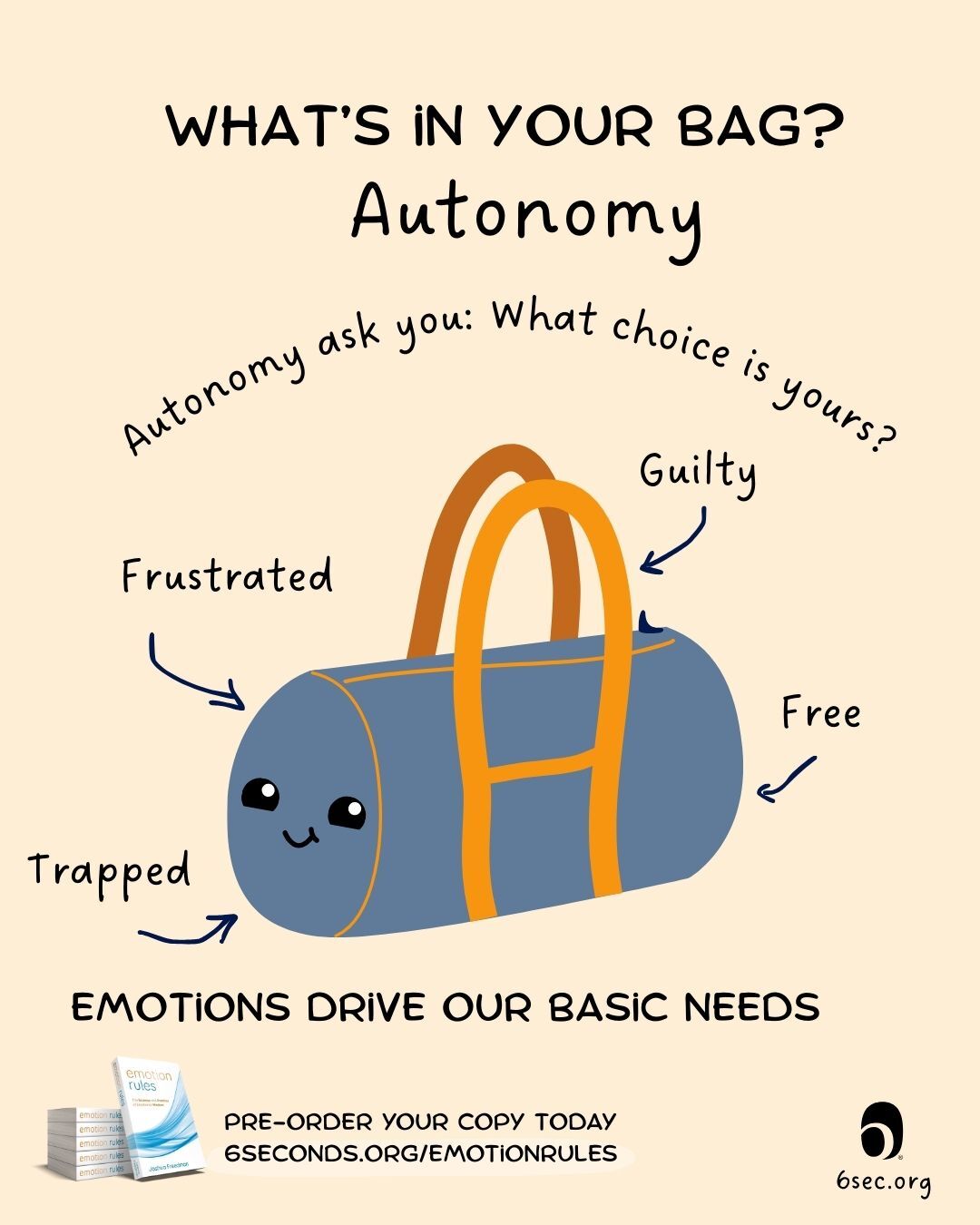
The resistance, the desire to stay home, the comfort I feel in my routines—that’s my autonomy need. It’s saying: You have freedom now. You get to choose how you spend your time. You’ve earned this space to be yourself.
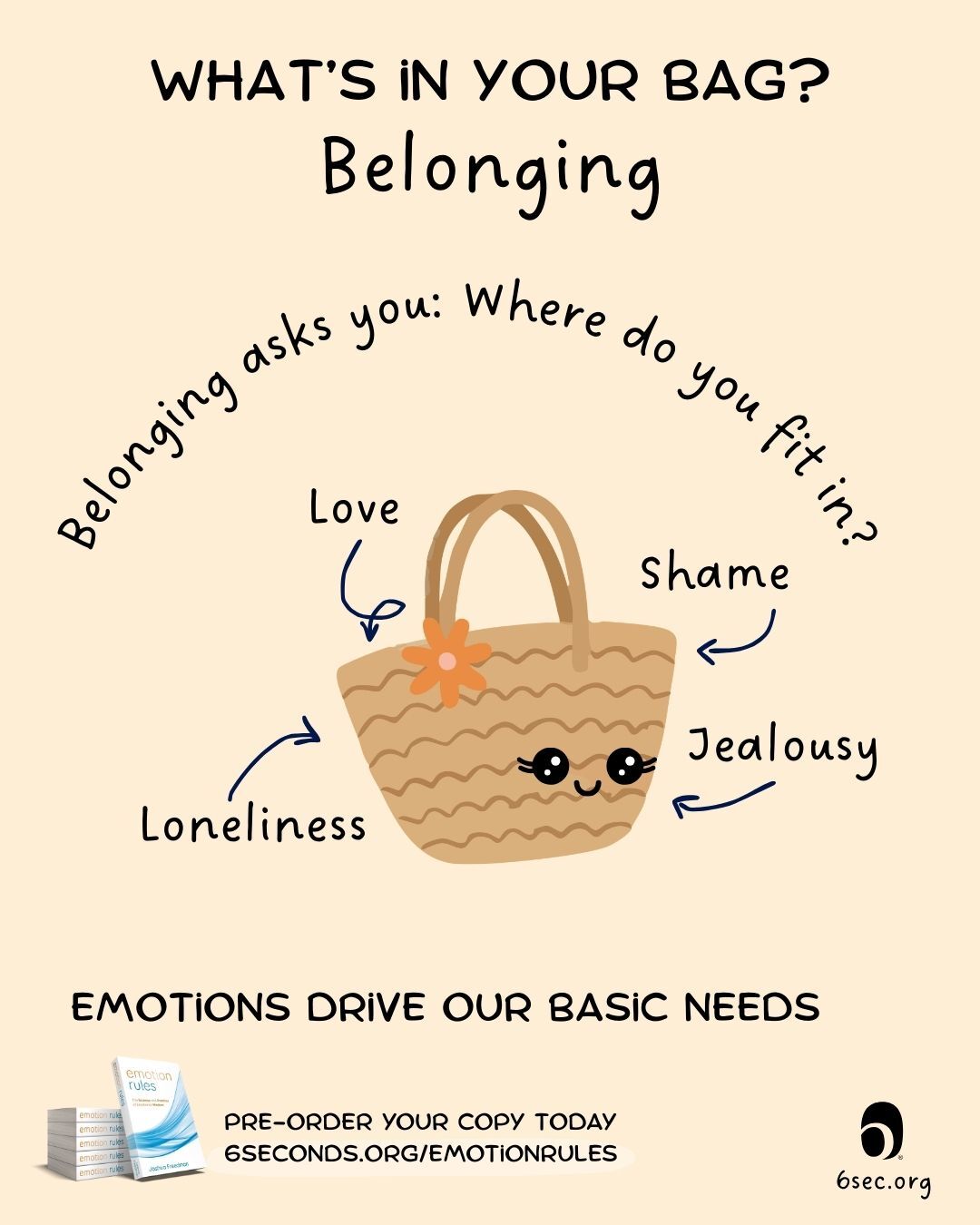
And when I notice the worry that my friend will stop asking, the knowledge that I want to be in relationships, the loneliness when I haven’t connected—that’s my belonging need. It’s saying: Connection matters. These relationships are precious. You need people.
Both are true. Both matter. The confusion comes when I think I have to pick one.
The Real Question
The limbic system research shows us something crucial: emotions aren’t directives. They’re data. They tell us what’s at stake, but they don’t dictate what we must do.
So instead of asking “How do I resolve these competing needs?” I can ask better questions:
- Which need is calling for attention right now, in this moment?
- What would it look like to honor both needs, maybe not simultaneously, but over time?
- Am I making this decision consciously, or am I defaulting to old patterns?
When I frame it this way, the path becomes clearer. Sometimes my autonomy need takes priority—I need solitude to recharge, and that’s legitimate. Sometimes my belonging need calls louder—I need connection, and showing up matters. Neither choice is wrong. Both needs deserve respect.
The key is making the choice consciously, understanding what I’m saying yes to and what I’m temporarily setting aside.
Practice: Map Your Emotional Drivers
The next time you feel confused by your emotions—when they seem to be pulling you in different directions—try this:
Notice the feeling. What are you actually experiencing in your body? Tension? Restlessness? Warmth? Withdrawal?
Name the emotion. Are you feeling frustrated, lonely, excited, fearful, free?
Trace it to the need. Look at the six core drivers and some of the associated emotions from Chapter 4 of Emotion Rules:
- Safety (trust, fear) — Am I feeling secure or threatened?
- Belonging (love, loneliness) — Am I craving connection or feeling isolated?
- Achievement (excitement, doubt) — Am I ready to take a risk or questioning my capability?
- Autonomy (free, frustrated) — Am I seeking my own path or feeling constrained?
- Meaning (inspiration, despair) — Am I looking for purpose or feeling empty?
- Growth (curiosity, boredom) — Am I open to learning or feeling stagnant?
Honor what you discover. You don’t have to act on every emotion. But acknowledging what matters to you—what your emotions are trying to tell you—gives you the power to make conscious choices instead of reactive ones.
Beyond Opposites
I did go to Quiz Night, by the way. And I enjoyed it. But I also told my friend that I need plenty of notice and can’t commit to every week. She understood. Because when I was clear about both needs—the belonging that draws me to friendship and the autonomy that protects my energy—I could show up in a way that honored both.
The wisdom Joshua explores in Emotion Rules is that emotions are important signals of what matters to us. We see behaviors all around us—in ourselves and in others—that don’t make sense at first. But when we take time to unpack what happened (the actions) and what we felt (the feelings), we can see the deeper drivers.
Your emotions aren’t trying to confuse you. They’re trying to guide you toward wholeness. The question is: are you listening?
Want to explore your own emotional drivers? Try the new Emotion Constellation Map to identify which of the six core needs are calling for your attention. And dive deeper into the science and practice in Joshua Freedman’s Emotion Rules, available for pre-order now.
For more articles, I recommend:

- How to Stop Second-Guessing Your Decisions: Four emotional intelligence practices for overthinkers - July 20, 2026
- Women in Leadership: The Emotional Intelligence Skills That Drive Workplace Wellbeing - June 8, 2026
- Resource Caravan: What would you take on a journey of a lifetime? New Research on Women Leaders Wellbeing and Emotional Intelligence - June 3, 2026