


Is Your Motivation Hiding? Shine a Light on It
by Patty Freedman
I love February. I have the bump of January’s energy carrying me forward, still believing in my goals, and I haven’t gotten waylaid or discouraged by too many setbacks. I revel in the feeling that there’s runway ahead as the days of the year stretch before me, reassuring me that there’s plenty of time. I’ve got my focus and am ready for some small wins.
But I also know how quickly that focus can flicker. Maybe you’ve felt it too? That creeping sense that the enthusiasm you started with is already fading, replaced by the pull of old habits and distractions.
If that’s where you are right now, you’re not alone. And here’s the good news: motivation isn’t something you either have or don’t. It’s something you can understand, cultivate, and—when it fades—reignite.
The Motivation Crisis Is Real, and It’s Growing
We’re living through what Joshua Freedman calls an “Emotional Recession.” Six Seconds recent study on global levels of emotional intelligence reveals that intrinsic motivation has experienced the most pronounced decline of any EQ competency, and by 2024 had become the lowest-scoring of the three Drive competencies. This decline leads directly to burnout, disengagement, and diminished emotional resources.
The numbers across the workforce are sobering. Gallup’s 2025 State of the Global Workplace report found that global employee engagement fell to just 21%, costing the economy an estimated $8.9 trillion in lost productivity. Meanwhile, 82% of workers report experiencing burnout to some degree, with younger generations hit especially hard.
But this isn’t just a workplace issue—it’s a human one. And understanding how motivation actually works gives us a path forward.
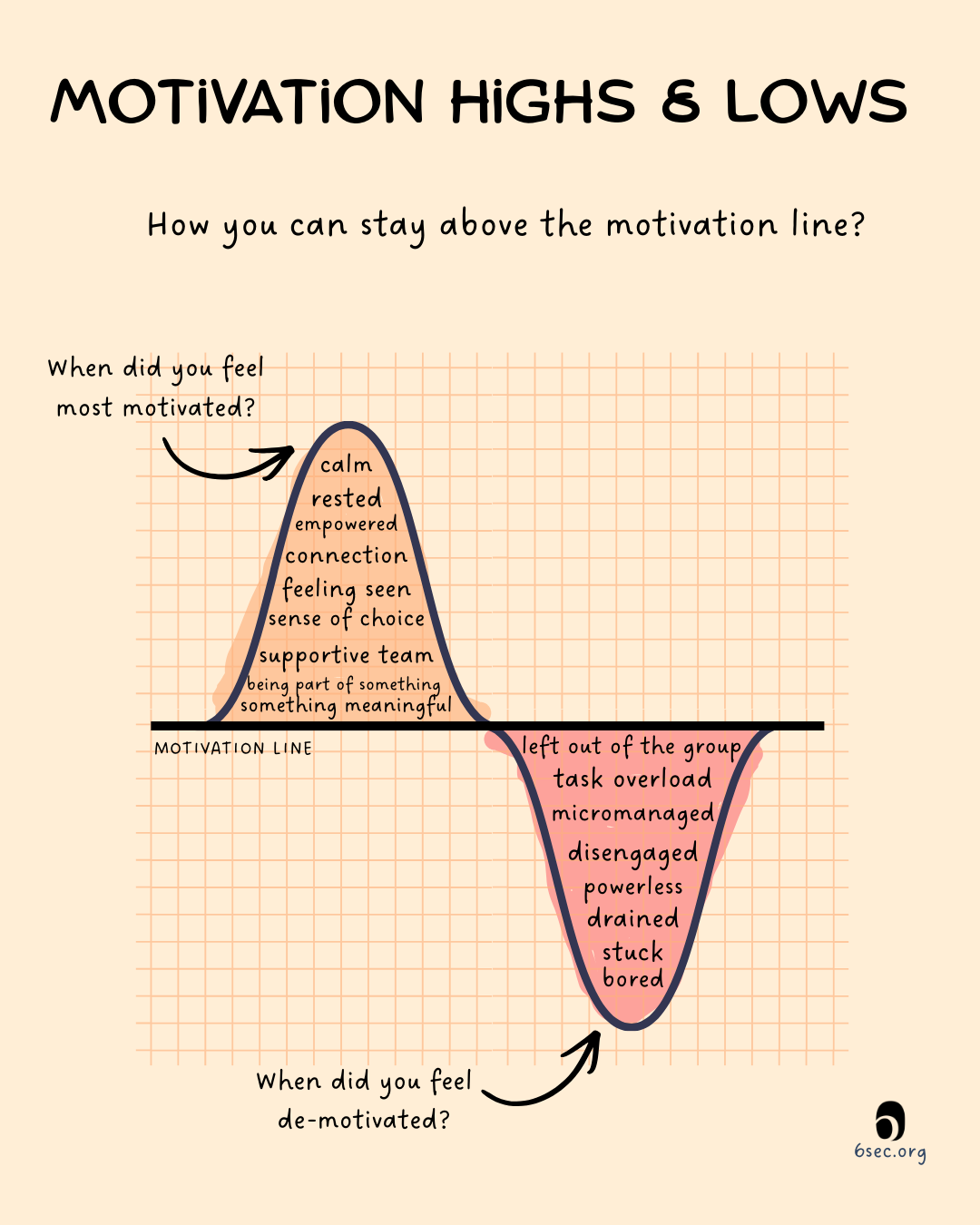
The Three Engines of Intrinsic Motivation
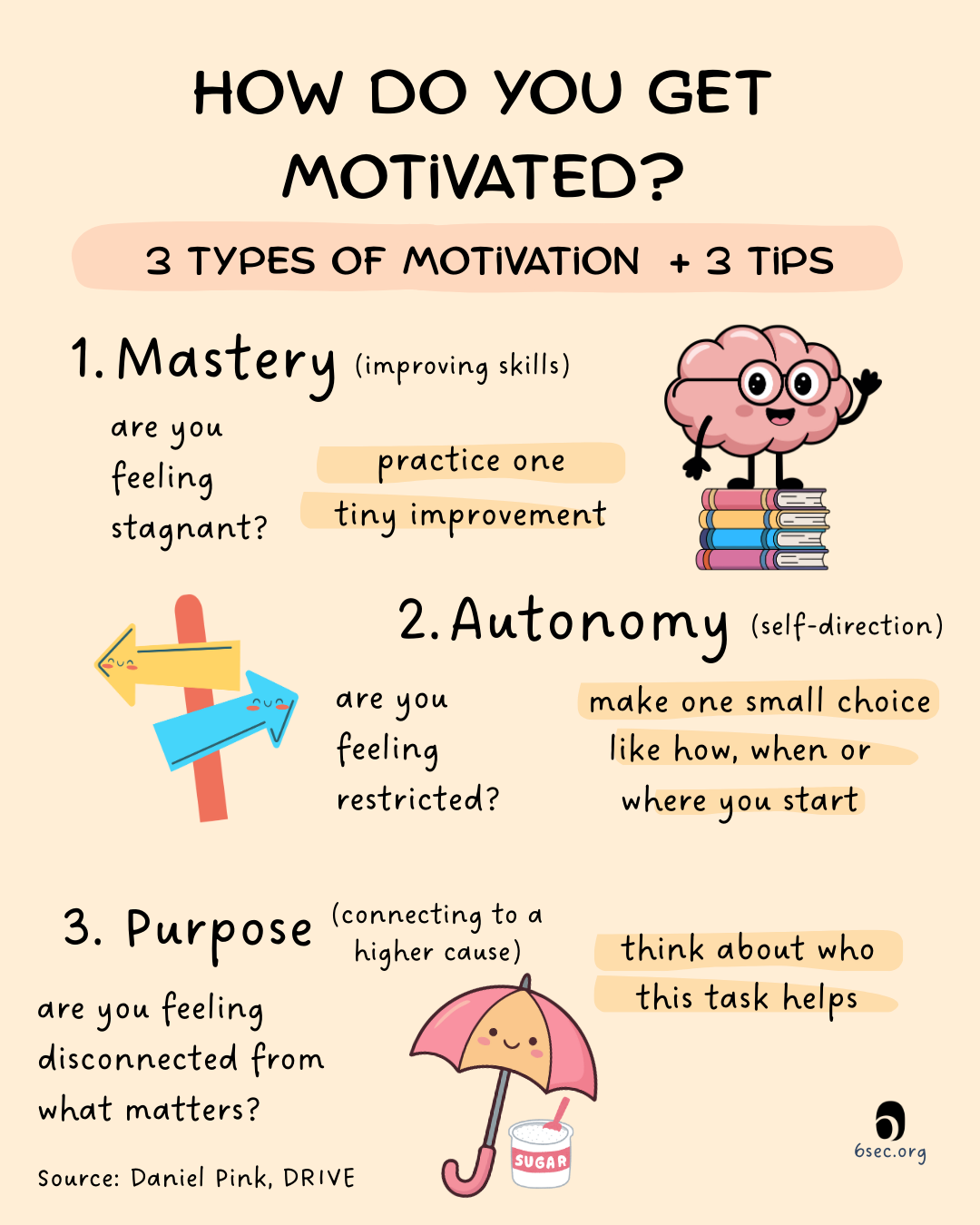
In his book Drive, Daniel Pink synthesized decades of research into a powerful framework: true, sustainable motivation comes from three core needs: Mastery, Autonomy, and Purpose. Check out Dan’s video explaining this concept
Mastery is the urge to get better at something that matters. When we feel stagnant—like we’re not growing or improving—motivation withers. But even small progress can reignite it. Research consistently shows that a sense of competence enhances intrinsic motivation and empowers people to take ownership of their work.
Autonomy is the desire to direct our own lives. Self-determination theory identifies autonomy as the strongest predictor of intrinsic motivation, defined as the sense of self-endorsement over our actions. When we have choice over how, when, and where we work, we feel less coerced and more desire to engage.
Purpose is the yearning to do what we do in service of something larger than ourselves. When we feel disconnected from why our work matters, motivation evaporates. But when we can see who benefits from our efforts, we find reserves of energy we didn’t know we had.
I crave autonomy most. When I’ve been in work situations where I don’t have freedom over my time or priorities, I gradually shut down and withdraw my engagement. As a leader, I’ve noticed this pattern has shaped how I lead my own team, I give them significant autonomy. We plan out goals and tasks together, and then I let them execute on that list. I don’t need them working at a set time or sitting with me while we complete the task. I want them to experience my trust in their judgment to get the job done.
How about you? Is your primary motivation engine also the one you create in your workplace or home? Are you aware of others’ motivation engines?
The Neuroscience of Getting Started
Did you know that dopamine, often called the “feel-good” neurotransmitter, isn’t primarily about pleasure? It’s about anticipation. Dopamine is the answer to your brain asking, “Is this effort worth it?”
Research shows when you set specific, attainable goals, your brain anticipates the reward and releases dopamine before you achieve it. We can leverage this neuroscience insight into making getting started easier. Breaking large ambitions into smaller milestones creates a series of dopamine-driven wins that build momentum and reinforce motivation. This is why progress tracking works, each small win triggers your reward circuitry and keeps you engaged.
And here’s another surprising fact: action often creates motivation—not the other way around. Instead of waiting to feel motivated, taking action (even small steps) often generates the momentum necessary to feel motivated. As James Clear writes in Atomic Habits, the key is making habits easy to start. Did you know the first two minutes matter more than the full commitment? This matters because motivation is temporary. Feelings fade, making it crucial to establish routines and habits rather than relying solely on feeling “motivated” to take action. The systems we build carry us when inspiration doesn’t. Check out this video with James Clear speaking on the 2-Minute Rule.
Extrinsic vs. Intrinsic: It’s Not Either/Or
We often hear that intrinsic motivation is “good” and extrinsic motivation is “bad.” But that’s too simple. Both are tools—the key is using each for its right purpose.
Extrinsic rewards can be useful for tasks that need to get done but don’t naturally spark joy. But research shows that when we rely on them too heavily, especially for work requiring creativity and problem-solving, they can actually undermine our internal drive. When performance-based pay is implemented and then removed, people often exert less effort than before the reward existed.
I’ve developed some tricks for when I need a motivation boost. One is to gamify tasks with my team and family—who can finish the most pages in our work session? Who can get the best time? Who can fold the most laundry during the commercial? It sounds silly, but we’re borrowing a bit of extrinsic fun to get started, and often the intrinsic motivation kicks in once we’re moving.
Another practice that helps me: when I’m struggling with a difficult task, I visualize the person who will be helped by my work. When I can see them getting stronger or smarter or comforted by this effort I’m putting in, I can dig deep and work harder on it. That’s putting the motivation of purpose in action.

Practical Tools for Reigniting Your Motivation
When your drive dims, try ask yourself these questions on Pink’s framework:
Feeling stagnant?
You might need Mastery. Practice one tiny improvement today. Progress—even small progress—fires up your motivation circuits.
Feeling restricted?
You might need Autonomy. Make one small choice about how, when, or where you start a task.
Feeling disconnected?
You might need Purpose. Think about who will be helped by your work.
And remember: don’t wait for motivation to strike. Take one small action, and let the momentum build from there.
The Spark Is Renewable
Motivation isn’t about pushing harder, it’s about working with your brain, not against it. When we understand the systems behind our drive, we stop blaming ourselves for “lacking willpower” and start creating the conditions for engagement to flourish.
The spark you started the year with isn’t gone. It’s renewable. And with a little understanding and practice, you can reignite it—not just in February, but whenever you need it most.
For more articles, I recommend:

- Turn Up Your Sparkle: How Authenticity Can Be Your Greatest Asset - March 29, 2026
- Should I Stay or Should I Go? Understanding Your Emotional Needs - March 1, 2026
- Is Your Motivation Hiding? Shine a Light on It - February 3, 2026