

Leading Kindness: When College Students Practice EQ in Service of Others, Their Own Emotional Intelligence Increases
Research Report
Eighty college students received emotional intelligence training, then led a citywide kindness festival for 400 second-graders and first-year college students. A controlled study measured what happened — to both the participants and the leaders.
The result: student leaders who actively practiced EQ through service showed statistically significant growth, outperformed a control group on every outcome measured, and were buffered against the wellbeing declines that typically affect college students mid-semester. Teaching emotional intelligence to others made the leaders’ own EQ measurably stronger.
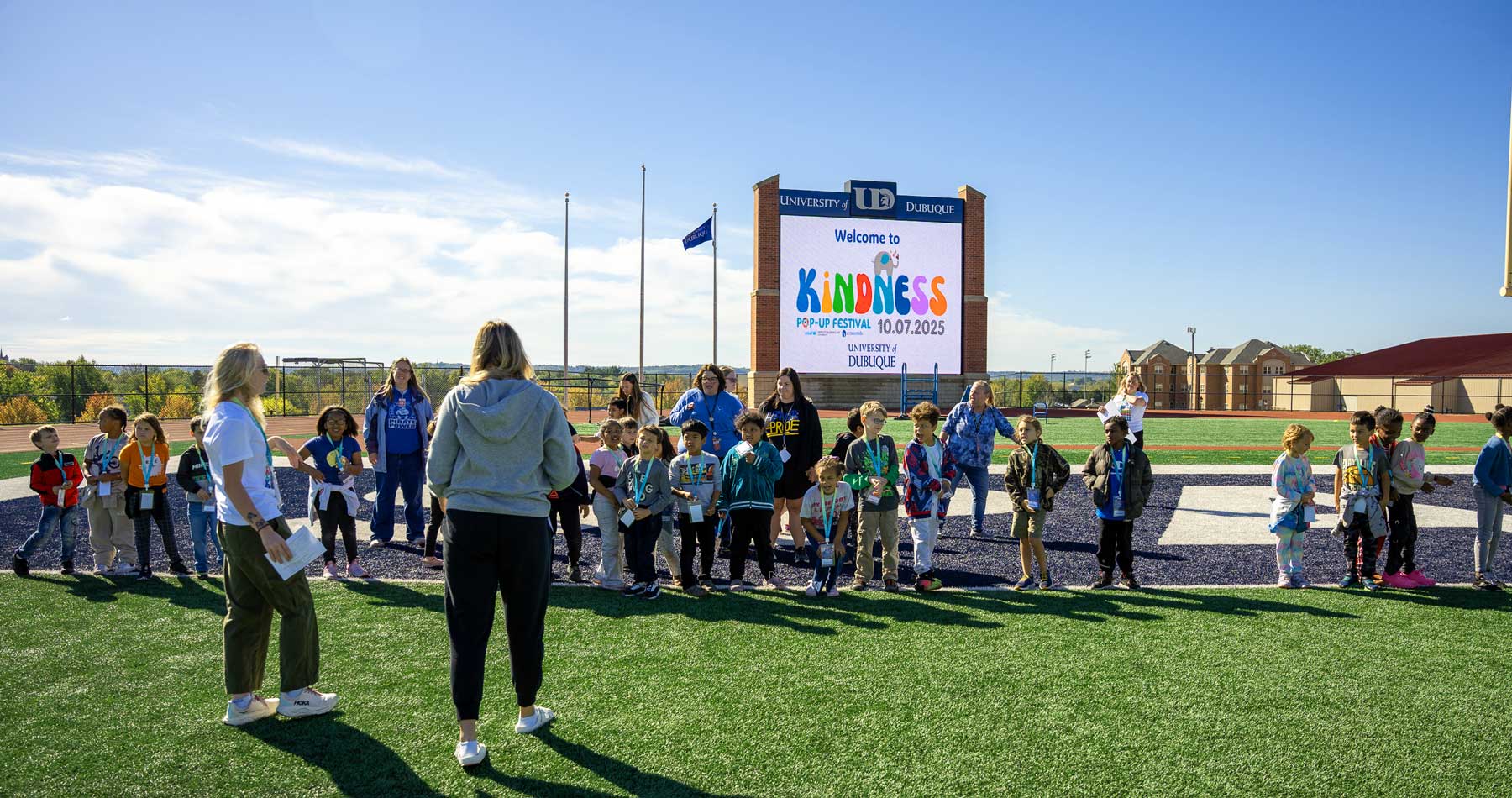
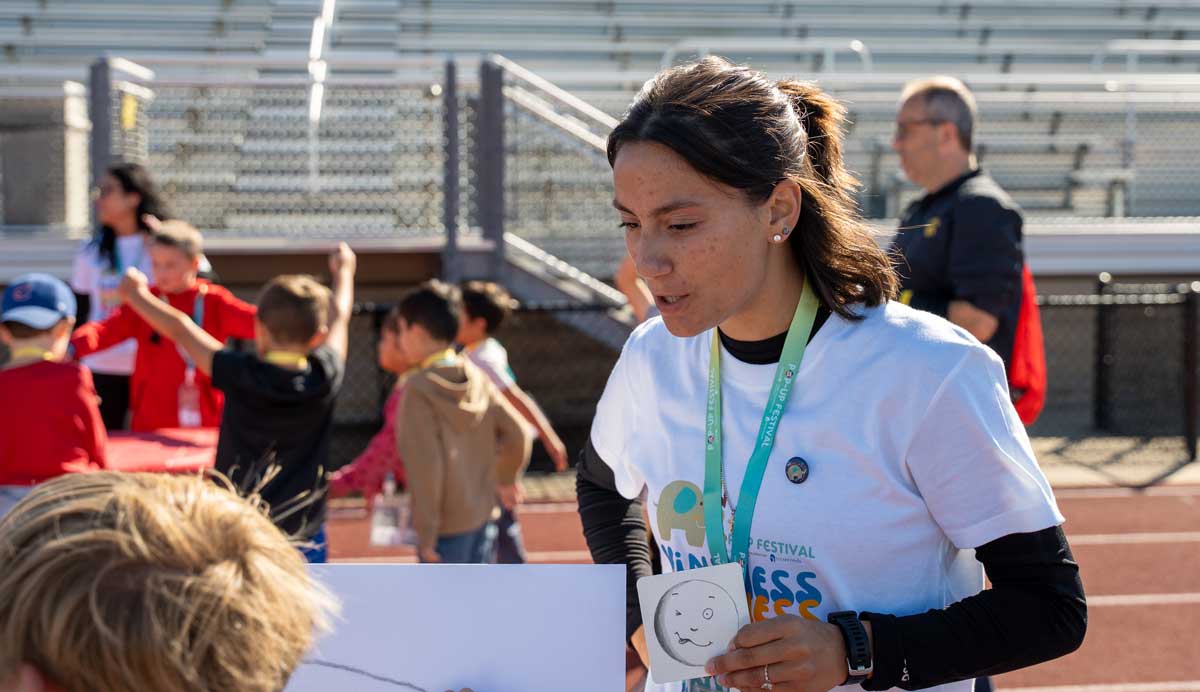
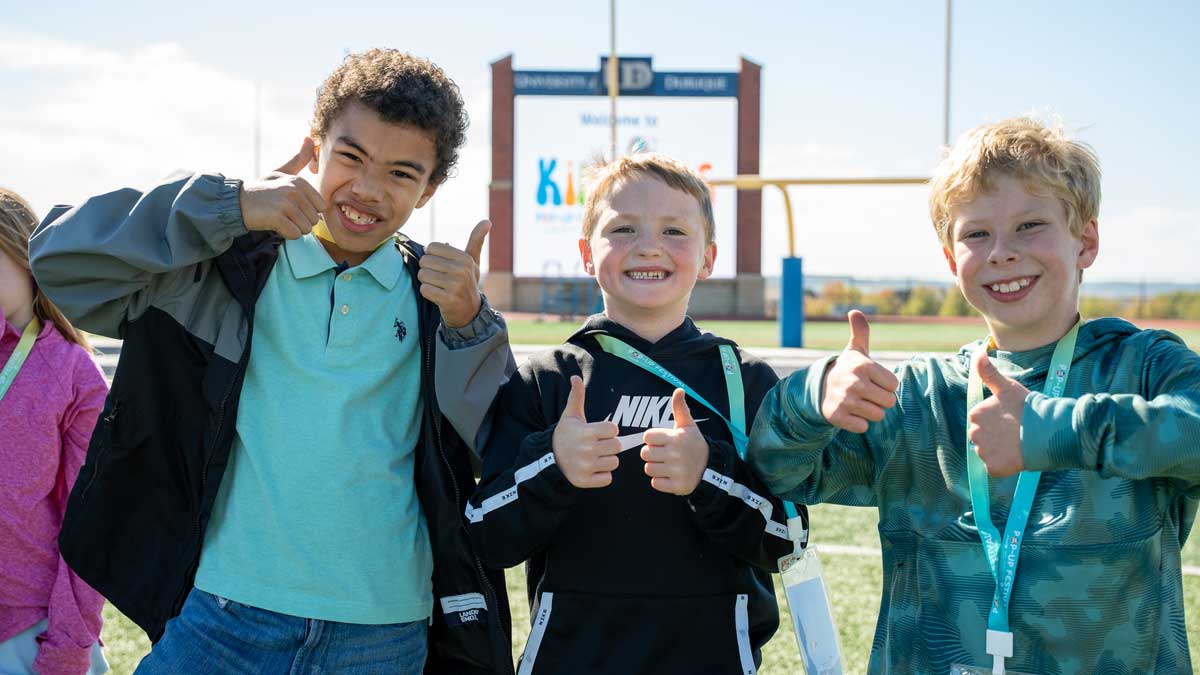
University of Dubuque students and second-graders preparing for the festival. Photo: Alex Smith & Adrian Smith
In this report:
- Why this matters now — College student wellbeing is declining. This study points to an intervention that builds resilience through purpose, not just programming. Jump to the resilience findings →
- The controlled comparison — Both groups attended the same event. Only the leaders grew. The research design isolates what made the difference. Jump to the research design →
- What the data shows — An interactive chart lets you explore how leaders compared to controls across 8 measures of EQ and life outcomes. Explore the data →
- In their own words — A focus group with student leaders revealed a consistent pattern: every student described a moment of challenge that became a moment of growth. Read what students said →
- A replicable model — This was designed to produce evidence other universities can act on. See the implications →
At a Glance: Young Adults Grow EQ & Leadership Through Service
Practicing EQ Drives Effectiveness
65% of student leaders improved in Effectiveness — compared to 50% of peers who attended the same event but did not lead. Growth was statistically significant (p = .046). The leaders who actively practiced EQ through service measurably increased their own emotional intelligence.
Leadership Builds Resilience
While the control group declined on Wellbeing, Quality of Life, and Relationships over the semester, the student leaders were buffered from these declines. Across all life outcomes, leaders outperformed controls — suggesting active service strengthens resilience at the time students need it most.
Challenge Produces Growth
In a post-event focus group, every student described a challenge-to-growth arc — a specific moment of difficulty that became a learning experience. Sentiment was overwhelmingly positive (6:1 ratio), with the dominant pattern being: challenge → adaptation → increased confidence.
Skills Transfer Immediately
Students reported applying skills from the festival directly to school practicums, coaching, and daycare work in the weeks following. The experience produced real-world capabilities — adaptability, delegation, redirection, tone management — that transferred to professional contexts immediately.
90% Kid Approval
Second-graders gave the festival a 90% weighted approval rating (329 responses). The experience worked for both audiences: children gained a joyful introduction to emotional intelligence, and the college students who led them grew measurably as a result.
A Controlled Comparison
Both groups were UD students. Both attended the same festival on the same day. The variable was the active facilitation role. This controlled design allows confident attribution: it was the act of practicing EQ in service of others — not simply attending — that produced the measured growth.
.
The Story
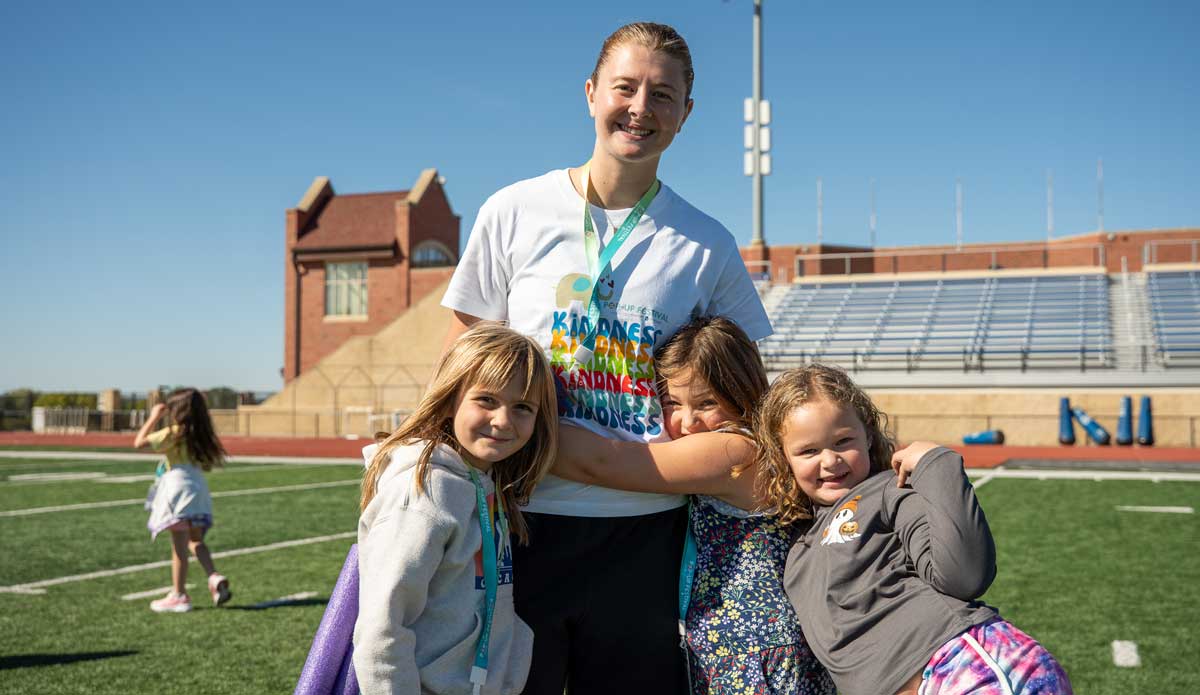
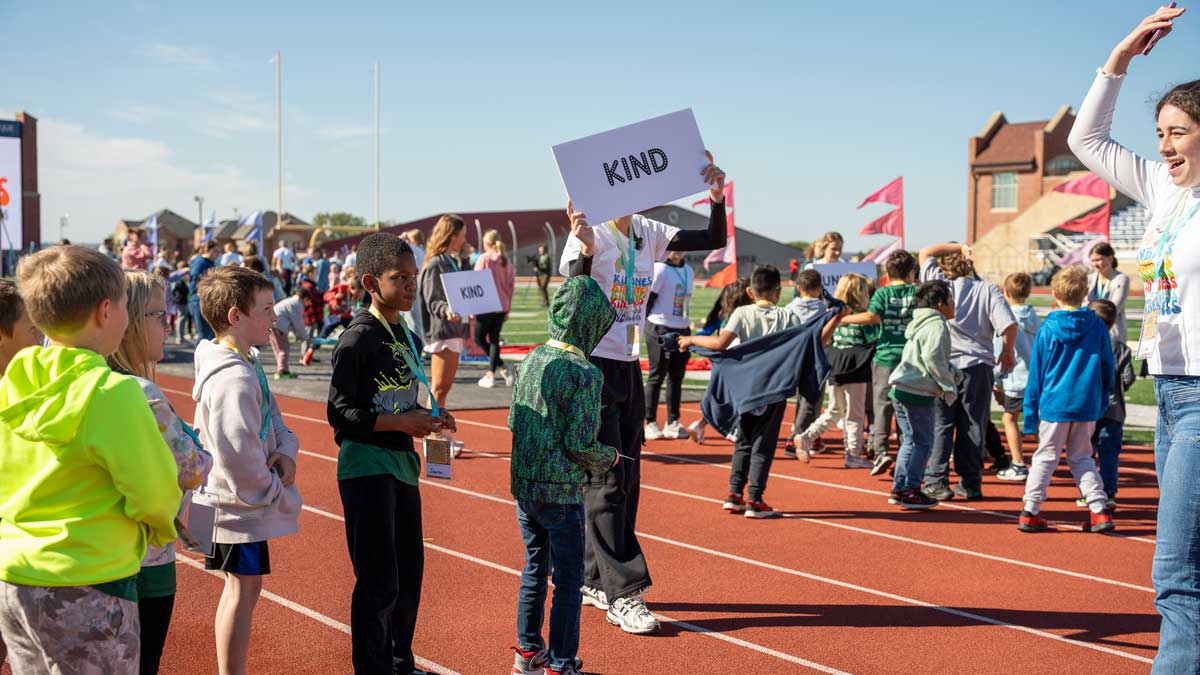
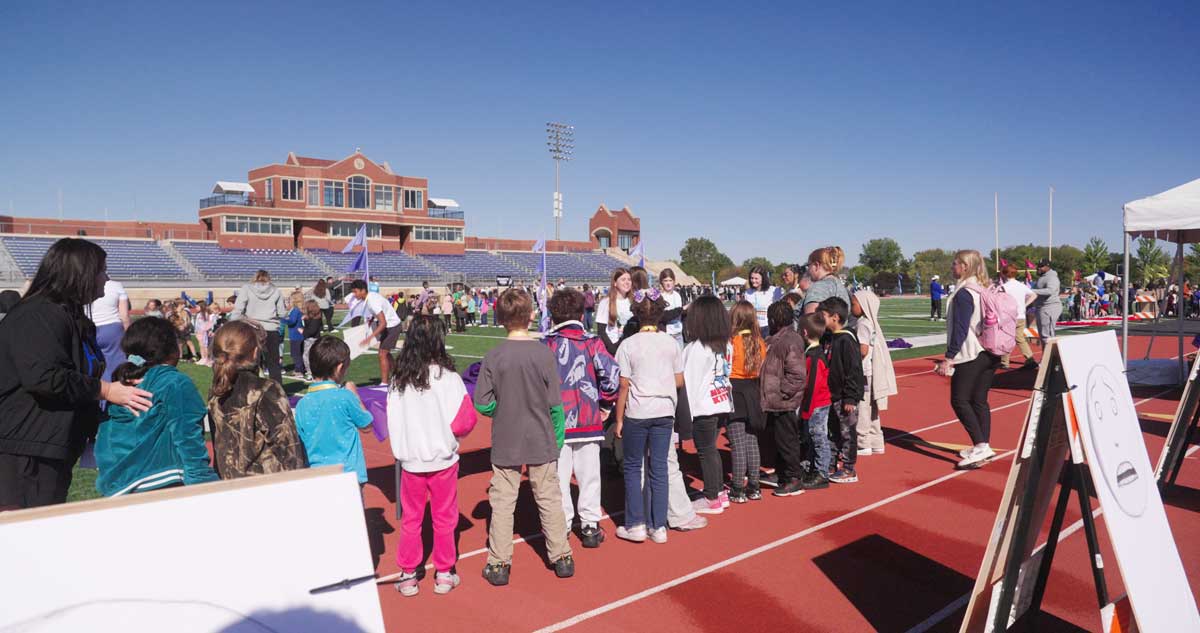
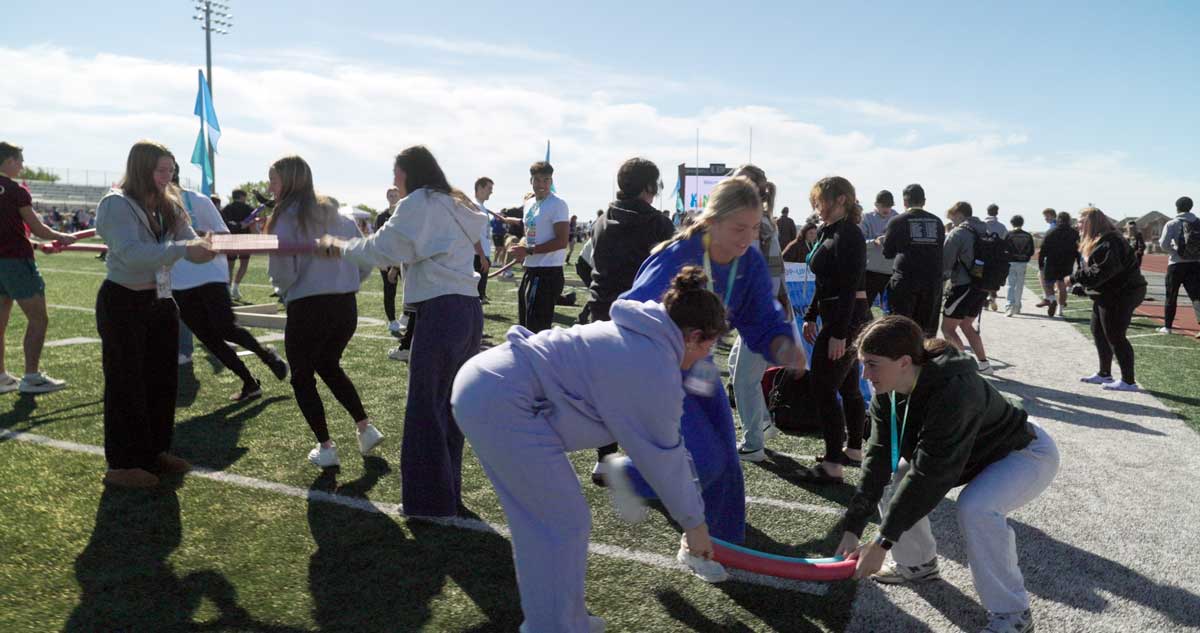
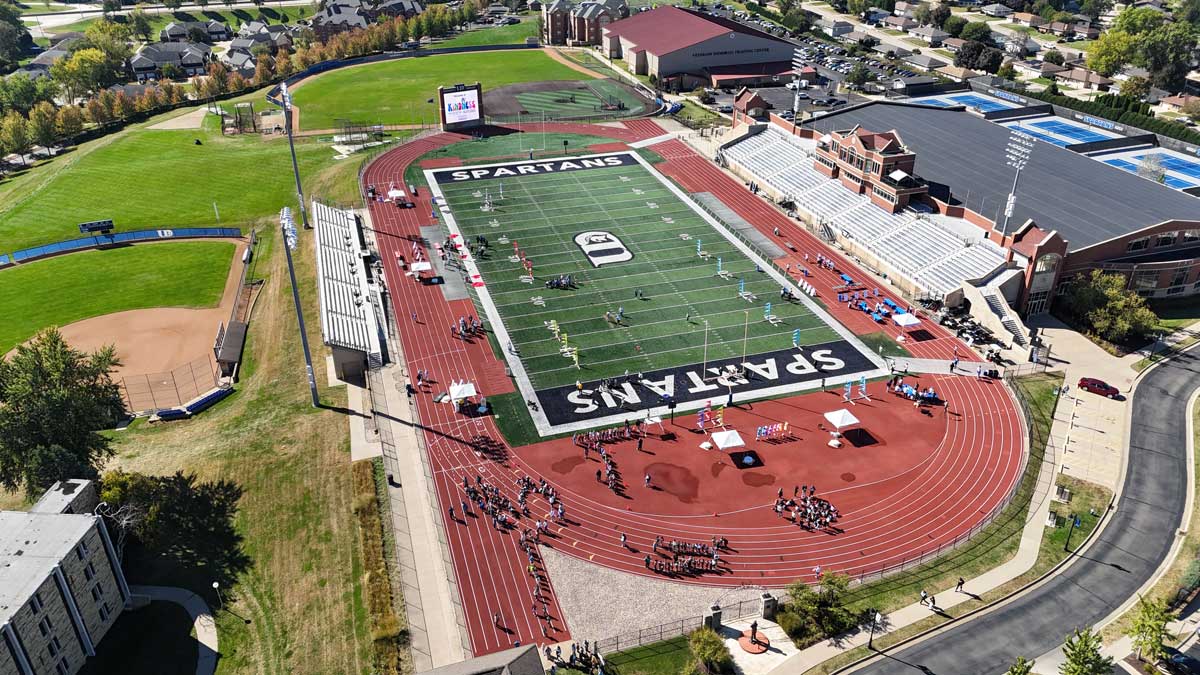
On October 7, 2025, more than 1,000 people gathered on Chalmers Field at the University of Dubuque for a citywide POP-UP Festival for Kindness. Three hundred first-year college students and four hundred second-graders from six public elementary schools in Dubuque rotated through hands-on emotional intelligence activities, facilitated by college students trained in the Six Seconds Model.
The festival was designed with a dual purpose: to give children and first-year college students a joyful experience of emotional intelligence, and to give college students the opportunity to practice EQ through leadership and service. A controlled study with pre/post assessment measured whether that active practice made a measurable difference.
It did — and the findings have implications for any university seeking to develop leaders while supporting student wellbeing.
Building on a Five-Year Partnership
This partnership began at the University of Dubuque, where the Personal Empowerment (EQ) program was launched in 2007 as part of the institution’s commitment to whole-person education. Over time, it grew into a campus-wide effort and is now embedded in the general education requirements for undergraduate students. As the program gained traction, it sparked interest within the city police department, leading to expanded training efforts beyond the classroom. From there, the work extended into the Dubuque Community School District through partnerships with administrators and principals, and over time evolved into a broader, citywide initiative.
Dr. Liza Johnson, who has served the University of Dubuque for over 15 years, developed the Personal Empowerment program by adapting the Six Seconds EQ-in-action model. When she became Director of the Wendt Center for Character and Leadership, she embedded this approach into the Center’s work—emphasizing heart-level development and the importance of putting character into action. She designed this leadership experience to give students the opportunity to practice EQ in real community contexts—and to measure the impact of that practice.
Six Seconds’ global POP-UP Festival provided the framework. POP-UP is the world’s largest social-emotional learning initiative, reaching 5 million+ participants in 200+ countries in partnership with UNICEF World Children’s Day. The Dubuque Community School District provided the participants: every second-grader from six elementary schools — Lincoln, Kennedy, Bryant, Sageville, Irving, and Audubon. And the university provided 80 students ready to step into a facilitation role.
The evening before the festival, Six Seconds CEO Joshua Freedman delivered the fall Michael Lester Wendt Character Lecture, sharing the science behind why actively practicing emotional intelligence — in real situations, with real stakes — drives deeper development than learning about it in a classroom.
The Festival
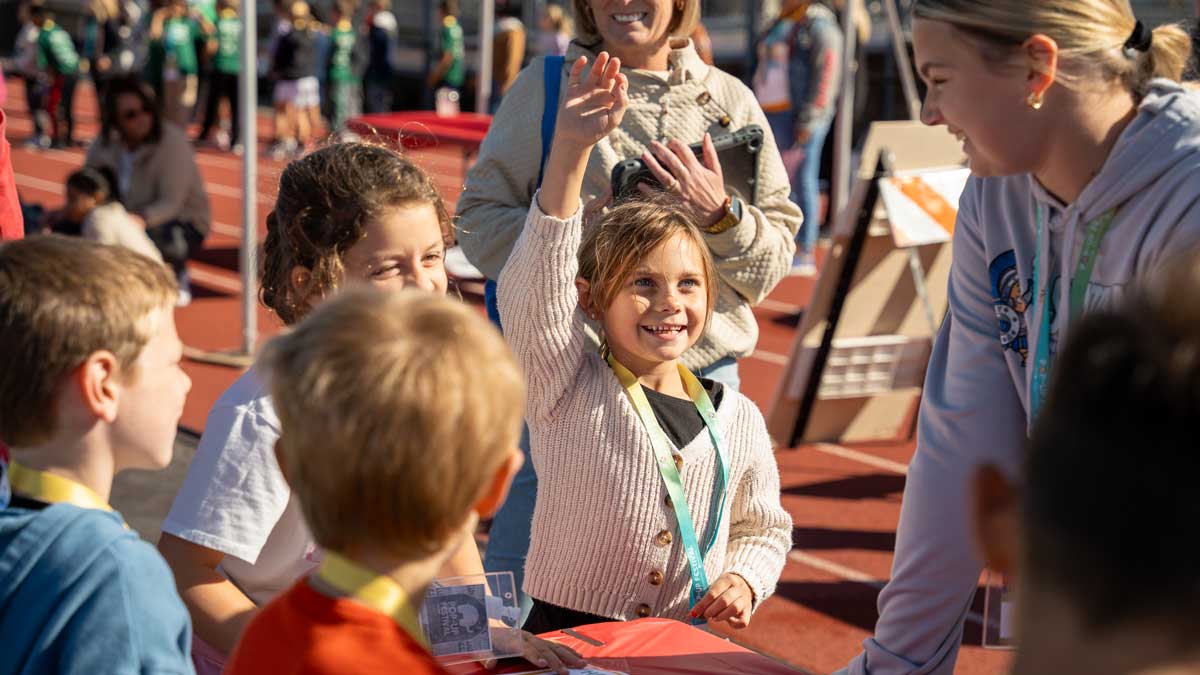
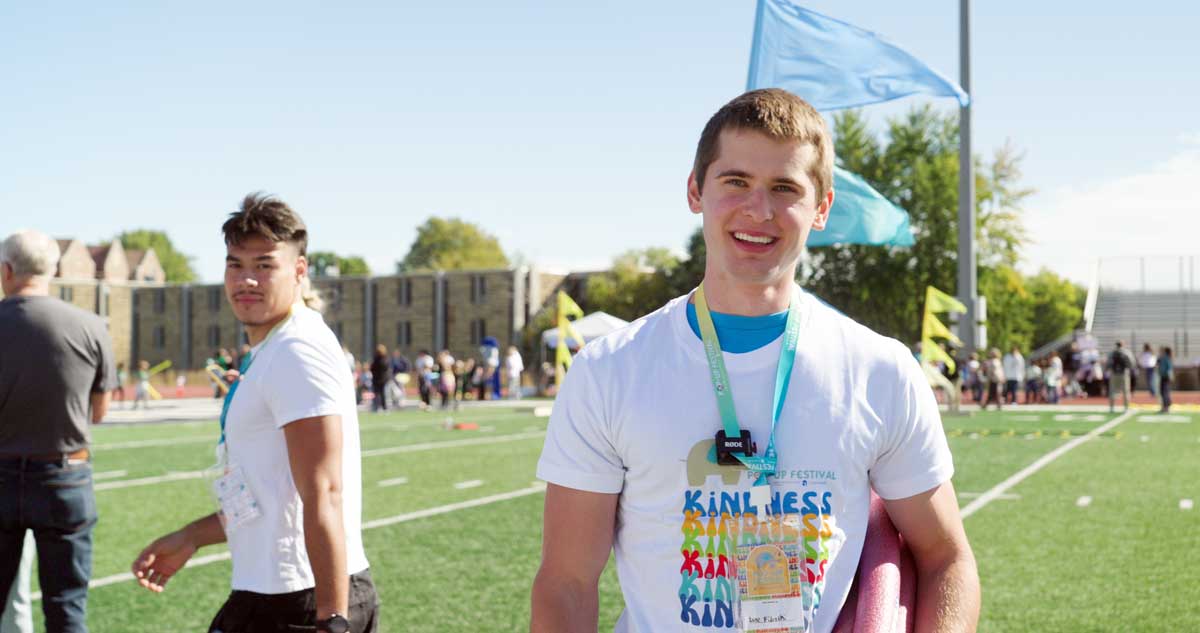
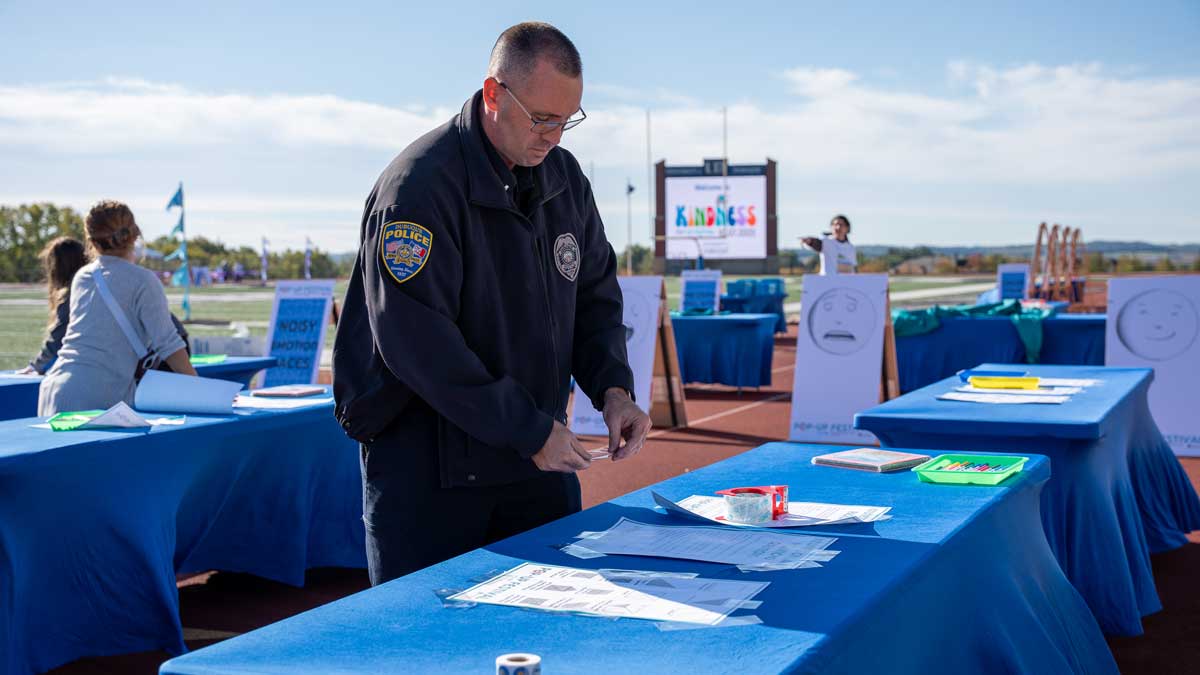
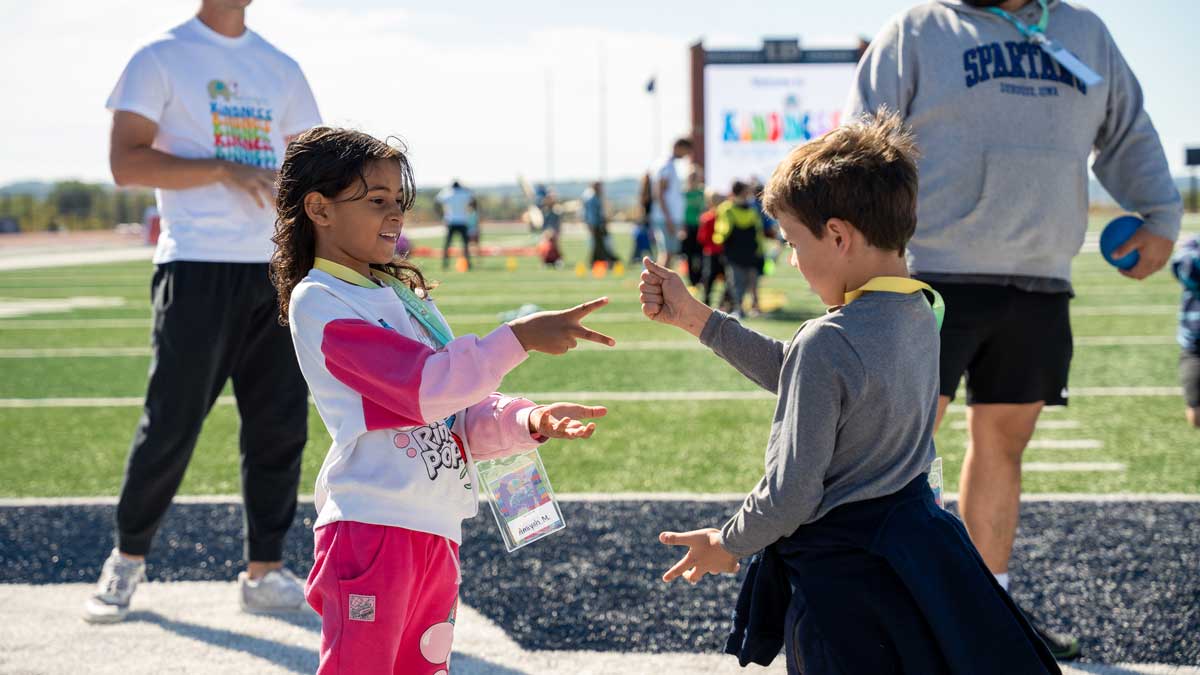
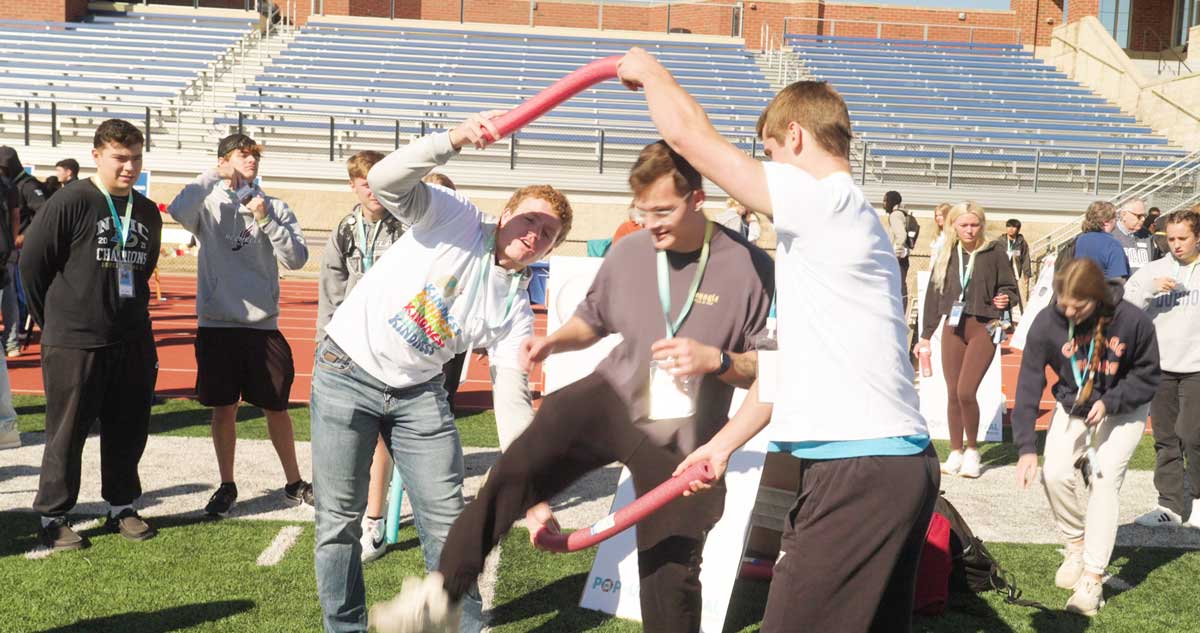
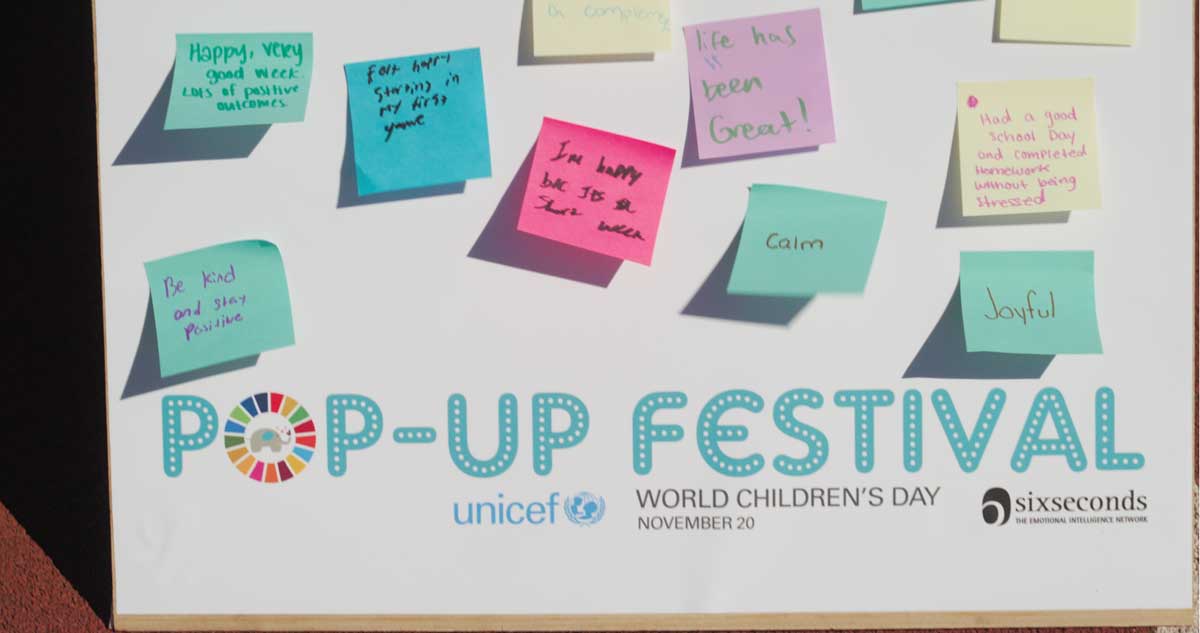
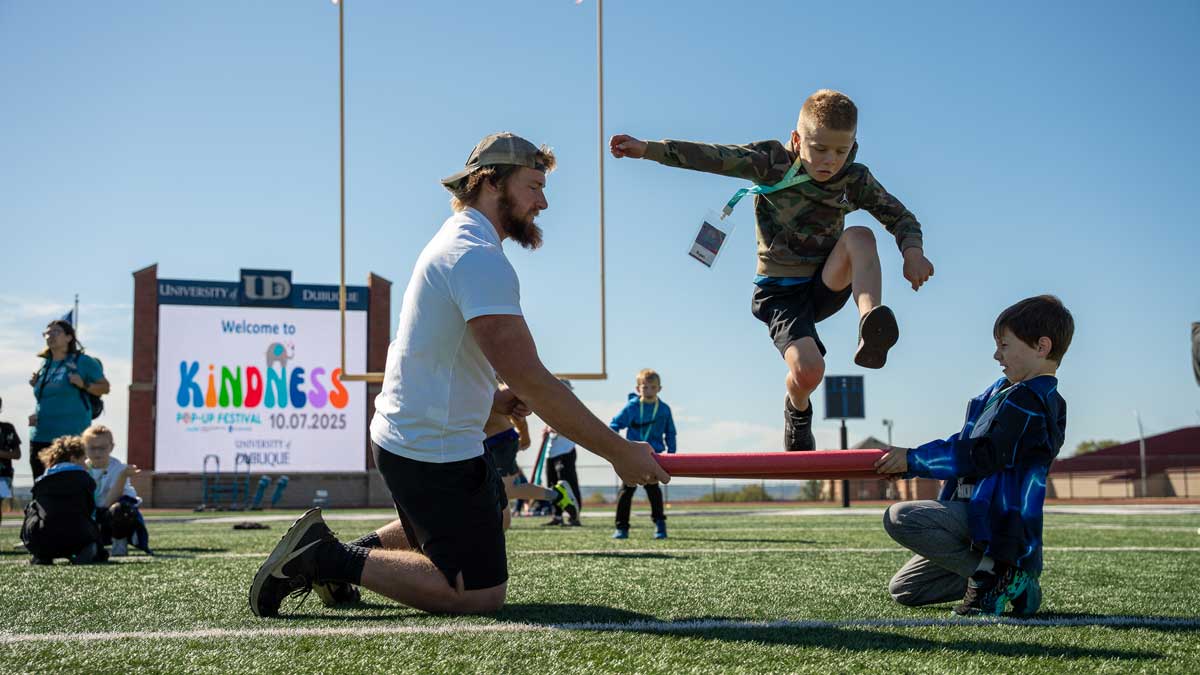
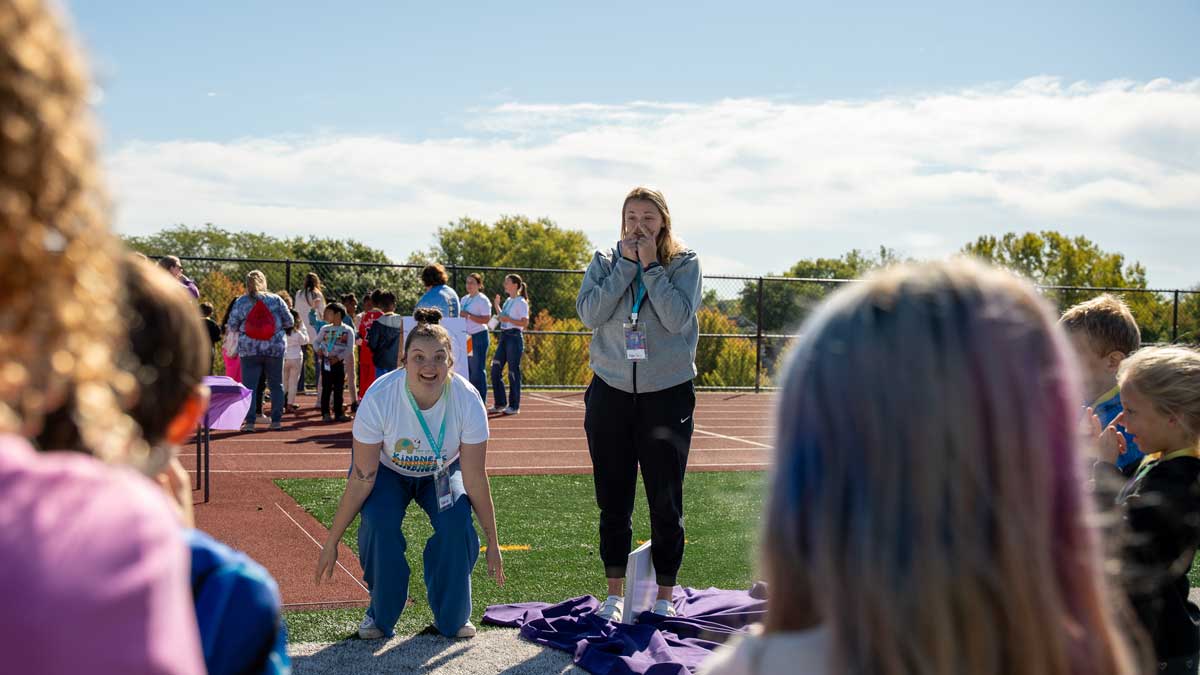
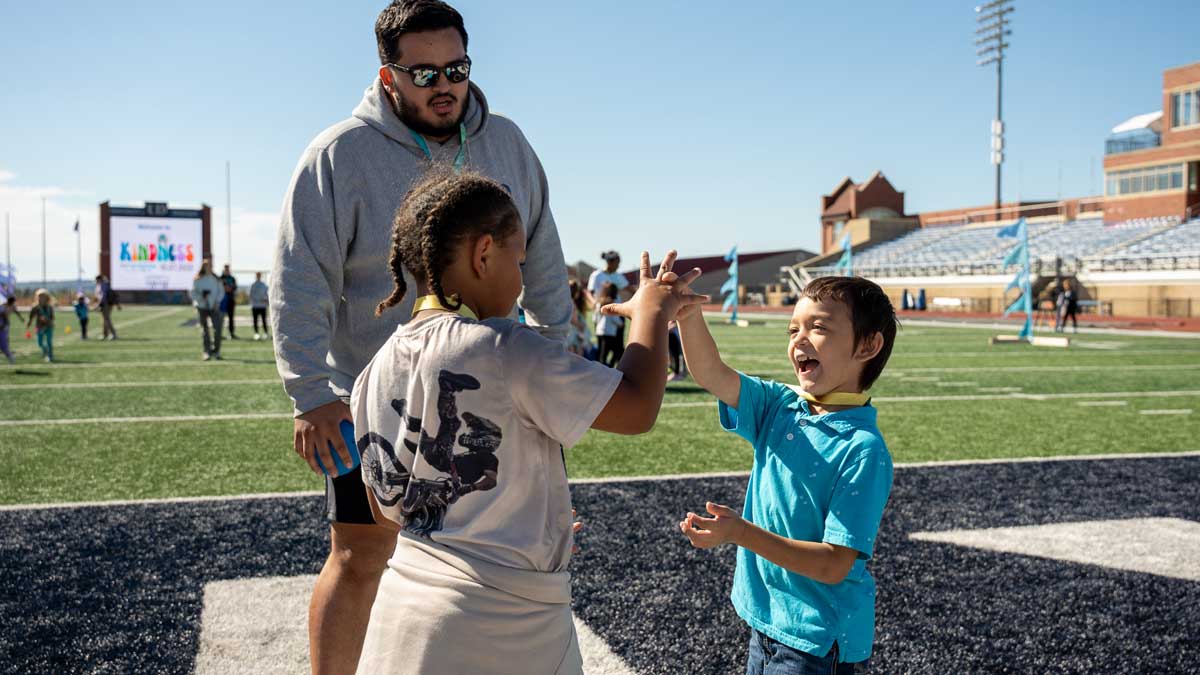
Second-graders rotated through interactive stations on Chalmers Field — cooperative games, art-making, movement exercises, and conversation prompts about kindness — each designed to build emotional literacy, empathy, and connection. College students facilitated every station, guiding groups of children and first-year college students through activities and modeling emotional intelligence in real time.
In the weeks before, the student leaders — Wendt Character Scholars, teacher education students, nursing students, and personal empowerment students — received approximately 60 minutes of customized training on the Six Seconds Model of Emotional Intelligence (Know Yourself, Choose Yourself, Give Yourself) and the rationale behind the POP-UP Festival. They learned to facilitate SEL activities, manage group dynamics, and apply emotional intelligence skills under authentic conditions.
Each child carried a POP-UP Passport and collected stickers at each station. At the end, we asked the second-graders to rate the day. Out of 329 responses, 90% gave it their highest approval rating. As one child told his mother afterward: “I learned that kindness is cool.”
The Research Design
We designed this intervention intentionally to collect rigorous data — data we could share with other universities considering similar initiatives. The study used a controlled, pre/post design with the Six Seconds Emotional Intelligence Assessment (SEI), a validated psychometric tool measuring 8 EQ competencies, 4 life outcomes, and Brain Profiles.
The critical design choice: we compared two groups of UD students who were both present at the same event on the same day.
Experimental group (49 matched pairs): Student leaders who received EQ training and actively facilitated festival activities.
Control group (92 matched pairs): First-year UD students who attended the same festival as participants but did not lead.
Both groups took the SEI before and after the event. The question was specific: does actively leading an EQ experience — putting emotional intelligence into practice through service — produce measurable gains beyond simply attending?
The Findings
Practicing EQ Drives Effectiveness
The primary finding: student leaders who actively facilitated the festival showed statistically significant gains in Effectiveness — their sense of competence, agency, and ability to achieve goals (p = .046, d = 0.29). The control group showed no change.
65% of student leaders improved in Effectiveness, compared to just 50% of peers who attended the same event without the facilitation role.
This result aligns with the core hypothesis: that practicing emotional intelligence in authentic, high-stakes situations produces deeper development than passive exposure. Students who trained in EQ and then applied those skills in service of 400 second-graders walked away measurably more effective. Their peers, who were present for the same experience but in a participant role, did not show the same growth.
Leadership as a Resilience Buffer
Across all four life outcomes measured by the SEI — Effectiveness, Wellbeing, Quality of Life, and Relationships — the student leaders outperformed the control group. Every difference-in-differences estimate was positive.
What makes this finding particularly relevant for higher education: the control group declined on Wellbeing, Quality of Life, and Relationships over the study period. This is a well-documented pattern during the college semester. Stress accumulates, and emotional intelligence scores often dip. It is part of the reality facing every university today.
The student leaders were buffered from this decline. While their peers were losing ground, the leaders held steady — and on Effectiveness, they gained significantly. The act of practicing EQ through service provided a protective effect across multiple dimensions of wellbeing, at the point in the semester when students are most vulnerable.
At a time when college student mental health is a national priority, this finding points toward a practical intervention: engage students in real responsibility in service of others, and it strengthens their own resilience.
The Data: Leaders vs. Controls
The difference-in-differences (DiD) analysis isolates the effect of the leadership experience by comparing how much the leaders changed relative to the controls.
| Measure | Leaders (change) | Controls (change) | DiD (leader advantage) |
|---|---|---|---|
| Effectiveness | +3.14 | +0.22 | +2.92 |
| Intrinsic Motivation | +0.57 | −1.50 | +2.08 |
| Consequential Thinking | +1.98 | −0.09 | +2.07 |
| Relationships | +0.19 | −1.32 | +1.51 |
| Recognize Patterns | +1.53 | +0.07 | +1.45 |
| Choose Yourself | +0.44 | −0.49 | +0.93 |
| Wellbeing | −0.25 | −1.06 | +0.81 |
| Quality of Life | −1.08 | −1.87 | +0.79 |
Difference-in-Differences (DiD) isolates the effect of the leadership experience by comparing pre-to-post change in leaders relative to controls. Positive values indicate leaders outperformed. Both groups attended the same event; leaders received EQ training and actively facilitated activities. n = 49 leaders, 92 controls (matched pairs).
The pattern is consistent: on most measures, the control group declined while the leaders either improved or held steady. The leadership experience did not simply develop one competency. It provided a broad protective effect against the stresses of the semester.
What Students Said
Three weeks after the festival, education students in Prof. Nicole Eisbach’s EDU 307 class participated in a recorded focus group reflecting on their experience. A semantic analysis of the 39-minute transcript provides qualitative evidence that reinforces the quantitative findings.
Challenge, Adaptation, Confidence
The overall sentiment was overwhelmingly positive — positive emotional language outnumbered negative language nearly 6 to 1. But the students were not simply enthusiastic. They were reflective. Every student who spoke described a specific moment of difficulty or uncertainty that became a concrete learning experience — a challenge-to-growth arc that mirrors the quantitative Effectiveness finding.
They described plans falling apart, groups arriving larger than expected, activities losing children’s attention. And they described how they responded: adapting in real time, delegating roles, adjusting their communication. The consistent thread was that working through those challenges left them feeling more capable. They did not just enjoy the experience — they grew through the difficulty of it.
What They Talked About Most
Seven themes emerged from the analysis, ranked by how frequently students returned to them:
Emotional Learning & Connection — The most discussed topic. Students described the significance of working directly with children’s emotions — something several said they rarely get to do, even in education coursework.
“To actually be working with emotions when sometimes that’s not always allowed in a classroom… was just really empowering. They were given strategies and tactics to learn: what does that look like? What does that feel like? How can I help myself to help others more?”
Relationship-Building Under Pressure — Students reflected on the challenge of forming connections with children they would see for only 20 minutes — a fundamentally different demand than their classroom placements.
“You had 20 minutes, you built a connection with those kids and then they moved on and you never see them after that. Trying to build that connection while instructing was a big learning curve.”
“We were able to get to know more students… and if we saw similarities between groups, we could take what we learned from the first group and apply it to the next.”
Adaptability & Real-Time Problem Solving — This theme connects most directly to the Effectiveness finding. Students described specific moments where they had to improvise.
“We just had to adapt once we saw it didn’t work… it’s a way to apply classroom knowledge into practical experiences.”
“I worked on not speeding up the introduction, but making it more efficient and realizing what filler words I was using that kids just aren’t hearing at all… It definitely got better by the third round.”
Skill Transfer — Students reported applying what they practiced at the festival directly to other professional settings — school practicums, coaching, and childcare. The experience produced skills that transferred immediately.
“It doesn’t make me as nervous anymore because during kindness day we didn’t have a choice… I think that transfers into the schools. I do know these kids, so I can correct you in a nice, positive way and redirect.”
“I’ve taken that into my job at the daycare — making sure they know I will be your friend, but you also have to listen to me.”
Leadership & Delegation — Teams learned to divide roles under pressure. One group discovered that six facilitators trying to coordinate simultaneously created confusion; splitting into smaller teams of three resolved it immediately.
“When me and my classmate just took it, we said: you’re doing this, we’re doing this. Perfect, go. It just toned it down. Everybody had their role.”
Professional Identity — Multiple students said the experience confirmed their career choice in education — in a way that felt immediate and personal rather than abstract.
“I left feeling very confident and fulfilled — like we did something good with the students.”
“There’s not a doubt in my mind. I don’t ever want to leave this profession. I want to continue to bring that high of helping others.”
Confidence — The festival directly reduced anxiety about professional situations, particularly for students who had not previously led a full group.
“At first I felt kind of nervous, but then I adjusted quickly, like after the first group.”
“Being outside, it was hard for them to hear. But after I got it, it made me more confident in coaching and in school.”
Implications: A Model for Practicing EQ in Higher Education
This study provides evidence for something that can be acted on immediately by universities, school districts, and community organizations.
The conventional approach to developing emotional intelligence centers on training: teach the concepts, practice in structured settings, measure the change. That approach works — Six Seconds’ earlier research with UD’s Personal Empowerment program demonstrated significant EQ growth from a 16-week course.
The POP-UP Festival model adds something critical: active practice in service of others. Students do not just learn about emotional intelligence. They apply it in real time, with real people depending on them. And the evidence suggests this kind of engaged, applied experience produces a distinctive outcome — particularly in Effectiveness and resilience.
The qualitative data clarifies why. Every student described a moment where conditions were difficult — a group too large, an activity losing energy, teammates miscommunicating. And every student described working through it, adjusting, and emerging more capable. That cycle of challenge and adaptation is the mechanism. It is the experience of becoming more effective by doing something that matters for others.
For universities seeking to support student wellbeing, this offers an approach that is complementary to therapeutic and preventive models. The student leaders were not enrolled in a wellness program. They were leading a festival for children. And the act of leading — of being needed, of putting skills into practice in service of a community — built their resilience at exactly the point in the semester when their peers were declining.
We designed this research so that other institutions could evaluate the model. The data is clear enough to warrant replication: train students in EQ, give them a real leadership challenge in service of younger learners, and measure what happens.
“This program is important because it gives Wendt Scholars and other UD students a real opportunity to put leadership and service into practice, not just talk about it. That kind of hands-on experience is what turns ideas about leadership into something meaningful and lasting.” — Dr. Liza Johnson, Director, Wendt Center for Character and Leadership, University of Dubuque
The Global POP-UP Festival
The Dubuque POP-UP Festival is part of Six Seconds’ global POP-UP Festival initiative — the world’s largest social-emotional learning event, reaching 5 million+ participants in 200+ countries in partnership with UNICEF World Children’s Day. The Dubuque model — where university students lead for younger children, with a research design measuring the impact on the leaders themselves — represents a particularly promising application for higher education.
Interested in bringing a POP-UP Festival to your campus or community?
Learn more about POP-UP Festival →
Study Details
Event: Dubuque POP-UP Festival: Kindness, October 7, 2025
Location: Chalmers Field, University of Dubuque
Participants: ~1,000 total (400 second-graders from 6 elementary schools, 300+ UD student participants, 80 student leaders, community volunteers, and staff)
Research design: Pre/post with experimental and quasi-experimental control groups
Assessment: Six Seconds Emotional Intelligence Assessment (SEI)
Experimental group: 49 matched pairs (student leaders with EQ training)
Control group: 92 matched pairs (first-year students, participants only)
Focus group: EDU 307 students, facilitated by Prof. Nicole Eisbach, November 6, 2025
Photographers: Alex Smith & Adrian Smith, The Holler Boys
Partners: University of Dubuque Wendt Center for Character and Leadership, Dubuque Community School District, City of Dubuque, Six Seconds
Authors: Patricia Freedman, Liza Johnson, Joshua Freedman
Special Thanks to: Jeremy Jensen & Rick Fulmer (UD Police), Cori Burbach (City of Dubuque), Anne Funke & Mary Bryant (University of Dubuque), Mimi Holesinger and Lisa Feltes (Dubuque Community School District), Ayaka Mawary & Hala Jimenez (Six Seconds), the faculty & staff at UD & City of Dubuque team members, and especially to the UD and 2nd grade students for being enthusiatic participants.
Funding: This project was made possible through a grant from the Wake Forest Educating Character Initiative; transportation for the 2nd graders was funded by a grant from Delta Dental. Additional support was provided by Six Seconds and the University of Dubuque.
Recommended citation: Freedman, P., Johnson, L., & Freedman, J. (2026). Leading kindness: When college students practice EQ in service of others, their own emotional intelligence increases. Six Seconds. https://www.6seconds.org/2026/04/09/university-resilience-study/
Additional Media Coverage

- Leading Kindness: When College Students Practice EQ in Service of Others, Their Own Emotional Intelligence Increases - April 9, 2026
- Emotional Intelligence in Healthcare: A Quick Check-In Guide to Improve Patient Care and Reduce Burnout - November 18, 2025
- Plutchik’s Wheel of Emotions: Feelings Wheel - February 6, 2025