

Build
Exceptional
Schools
Create and sustain a thriving school culture with validated emotional intelligence practices. Equip your administrators, teachers and students with the skills they need to thrive. Solutions for Pre-K through graduate school.
We support schools & universities to thrive with emotional intelligence.
Did you know that emotional intelligence is correlated with increased academic achievement, better health, stronger relationships, greater self-efficacy, and improved quality of life? Developing the learnable, measurable skills of emotional intelligence is critical to success in education for all ages.
Emotional intelligence improves:
• Faculty and staff wellbeing
• Professional development
• Student success
• A thriving culture
A comprehensive Social Emotional Learning approach includes the development of skills for everyone in the school community, which triggers a multiplying effect as people adopt and aspire to new standards, together.
Already use the CASEL model? The Six Seconds Model of Emotional Intelligence aligns with the CASEL Wheel and makes it actionable – learn more here.
Equip students, faculty and staff for success
with emotional intelligence.
Schools and universities all over the world use Six Seconds tools and methods to implement comprehensive SEL solutions. From the Wangari Maathai Foundation to Antioch University, we partner with schools and nonprofits to identify and implement actionable, research-backed solutions.

Support your stakeholders with emotional intelligence.
Explore our major areas of expertise.
 Educator Wellbeing
Support your faculty and staff in a meaningful way. Counteract burnout and create a sustainable environment.
 Student Success
Social and emotional learning isn’t an “extra” or “nice to have.” It’s a critical element driving student success.
 Professional Development
Leverage evidence-based emotional intelligence training for faculty, staff and administration to thrive.
 School Climate
Create a shared vocabulary around emotional intelligence and use that to build mutual trust and respect.
Get Your Free eBook
A meta-analysis of the evidence for emotional intelligence in our schools.
Emotional Intelligence Into Higher Ed eBook
A meta-analysis of the evidence for comprehensive emotional intelligence programs at colleges & universities.
The complete solution for
emotional intelligence in education.
Assessments – Curriculum – Certification
Measure what matters.
Emotional intelligence has been linked to greater academic achievement, less anxiety, and greater life success for students. And yet, how often do schools measure it in a meaningful way? Six Seconds publishes robust and effective assessments of school climate and emotional intelligence and is a CASEL approved assessment provider. Get valuable data that you can put into action. All Six Seconds assessments are normed and validated with a global dataset, anonymous for users, and easy to use.

Build capacity.
Make evidence-based social and emotional learning an integral part of your school’s identity.
All Six Seconds assessments are designed within models and frameworks that make the feedback practical and actionable. Create a shared vocabulary and learn widely applicable tools & methods for everyone in the community to start practicing emotional intelligence. The Six Seconds Model of Emotional Intelligence comes with thousands of hours of curriculum, hands-on tools and games, and workbooks.

Get certified.
Founded by educators committed to emotional intelligence for over 50 years, Six Seconds’ certification courses prepare you to implement comprehensive Social Emotional Learning. With educational best practices embedded in the course and mentors with decades of expertise ready to collaborate, this course allows you to put emotional intelligence theory into action. Walk away fully equipped to bring EQ to your school or university.

Featured Articles

Leading Kindness: When College Students Practice EQ in Service of Others, Their Own Emotional Intelligence Increases
80 college students received emotional intelligence training, then led a citywide kindness festival for 400 second-graders & 300 first-year university students. A controlled study measured what happened — for both the children and the leaders.
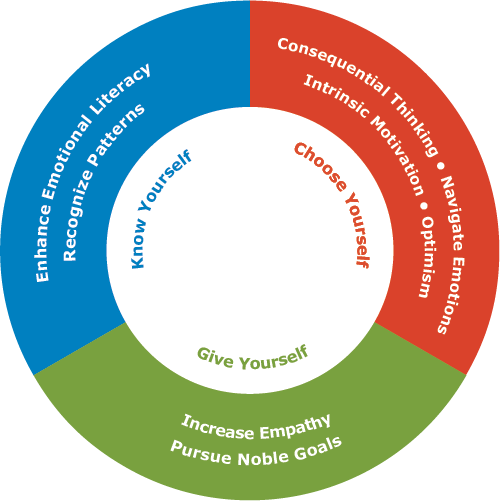
The Six Seconds Model of Emotional Intelligence: What It Is and How to Use It (+ PDF)
What is emotional intelligence and how do you practice it? Explore the Six Seconds Model of Emotional Intelligence to improve your life and relationships.

The Science of Achieving Your Goals
How to achieve any goal you have in 6 simple steps – boosted with emotional intelligence insights.

In the Age of ChatGPT, What Should Teachers Focus On?
AI tools like ChatGPT are transforming education, prompting a shift from knowledge transfer to fostering skills like empathy, creativity, and critical thinking. This article emphasizes the role of Emotional Intelligence in inspiring engagement and purpose, helping educators adapt to the evolving demands of an AI-driven world.

What Should Schools Prepare Us For? Educating for a Future That Inspires and Uplifts
In Italy, only 5% of workers are engaged in their jobs—an economic crisis with deep roots in the education system. What needs to change?

Fortifying the Mental Health of the Entire School Community with Emotional Intelligence
Wellbeing program at St. Peter’s Primary replenishes reserves post-COVID: ‘Truly life changing for many of our staff,’ school leaders say. Read the full case study here.