

Fights Well
with Others:
Tips for Collaborative
Parenting
Some days, it feels like parenting is just about moving from one conflict to the next. How can we raise compassionate and thoughtful children when sometimes all we want to do is throw our hands up, yell and slam the door?
by Patty Freedman
The task of parenting – like technology, work, education and travel – has been subject to enormous evolution in the past few generations – and, from what we’ve seen in terms of anxiety and stress in 2020, we’re facing more upheaval today. [tweet_dis]What we learned from our parents may not be the best way to raise our kids. But what else are we to do? How can emotional intelligence be applied to bringing up our children?[/tweet_dis]
I won’t try to address which one of these skills is the most important. Instead, I’m interested in applying EQ to make the everyday heavy lifting of parenting just a little easier and more successful.
Happily, parenting styles have modernized from when I was growing up. The antidote to old-fashioned, authoritarian parenting (Do as I say!) is a rather more thoughtful, collaborative style.
[tweet_dis]Collaborative Parenting emphasizes communication, negotiation, compromise, and an inclusive approach (Let’s solve this challenge together!) to family decision-making.[/tweet_dis]
This isn’t an easy system to master, particularly if our own backgrounds tended toward the “I‘m the boss” style, but once we analyze the concept, we see that collaborative parenting amounts to treating our children like people, and not like malfunctioning machines or errant pets who refuse to be house-trained.
 [/tweet_dis_img]
 At its roots, Collaborative Parenting requires a discursive approach to those moments where the needs of the parent, and the ever-changing wishes of the child, need to be brought together in a form of compromise. But wait—here’s the first big challenge: some children don’t have the vocabulary or emotional maturity to engage in thoughtful discussion of this kind. I know we’re not talking about negotiating a major peace treaty or a climate change agreement but these agreements are complex and do require care. Imagine how urgent these discussions feel to kids — like how much screen-time tonight, a second scoop of ice cream, or what might be a reasonable Halloween costume for middle school dance.
Let’s take as our starting point the idea that being able to negotiate with our children will result in a smoother transition from the binary anger of “NO!” to the more nuanced middle-ground of “Oh, ok.”
To get to this point requires an important skills set – linguistic aptitude, a little empathy, and a willingness to find a solution to the impasse. In short, a baby isn’t going to participate in this discussion, but a three-year old just might. And once the youngster realizes that, “NO!” achieves nothing but a roadblock (and a frazzled and frustrated parent) they’re more likely to try to find a compromise. I find that instead of “No,” an “Ok, how about we try this” works better. These are ambitious notions, and they won’t work in all circumstances, but they’re terrific starting point.
“Try this” has a partner concept: “This person who loves me is a lot happier now that I’ve climbed down from my original position.” What a wonderful moment of bonding and empathy this is! The child sees that compromise brings good results for you both, the classic win-win; the child receives an amount of screen-time which is (after all) perfectly adequate, as well as the satisfaction that comes from pleasing and assisting their parents. At the same time, the parent demonstrates a number of really critical strategies for solving interpersonal problems, and shows that they’re prepared to meet the child half way, in an environment of love, compassion, and tolerance for their viewpoints. This is trust. This is how we build it one moment at a time.
And, may I emphasize that this “connecting and compromising” pattern must be established before the teenage years.
We cannot overstate the power of this negotiation, nor its potential for creating future communication pathways for more elaborate and nuanced compromises (such as where the teenager might apply to college, whether they should wear that dress to the Junior Prom, or whether going hardcore vegan immediately is fair to everyone else in the house). [tweet_dis]If we have trust in our relationships, layers and layers of it built up over time, it makes the high stakes decisions much LESS risky[/tweet_dis] because there is a history of solid, reliable, trust to count on. Kids think back to the times they’ve counted on you and you’ve been there to support them. Parents think back to the times they’ve expected kids to follow through on agreements and have evidence that kids will make good decisions.
 [/tweet_dis_img]
 Let’s examine the other kind of parenting style for a moment—the authoritarian parent. Have your heard “My parents hit me with a belt twice a week, and it never did me any harm”. The oft-resurrected claim that physical violence by a loved one has no emotional implications is an act of self-deception. My response to that claim might be, “You do not know what you might have become without that punishment. The harm has not been identified, defined, nor explored.”
In many cases, this dishonesty masks deep-seated resentment and emotional damage, often the kind that takes years to emerge, and does so destructively.
Now, consider this statement: “Because I said so!” The insistence that the child obey, simply because the parent is a parent and that’s how things should be, rejects the idea that the child might be able to understand the underlying rationale. Moreover, the child might even have a different and intriguing perspective. The child might even have an “out of the box” solution to the problem or challenge.
I stand firm by if we cannot give reasons for the rules—then there is no justification for the rule. As a parent, I understand just how maddening things can get, and like everyone else, I’ve been tempted to yell, to shake my finger, to impose my views or even my strength on the frustrating little creature. However, I’d argue that not to do so – to be calm and tolerant in the face of bawling, inchoate illogic – is to set the best possible example.
Instead of dictating the course of events, we can provide alternatives. Instead of laying down the law, we can negotiate a compromise. Rather than dominating, we can seek our child’s opinion and show them that their views do matter. This is where the role of parent blends into that of coach, a mentor, an aunt or uncle, a counselor and/or advisor. Perhaps most tellingly, I regard these discussions as the creation of partnership–one of incalculable value on the long road to adulthood.
[tweet_dis]Parents often disagree as to how issues should be handled, and here again, EQ can smooth the way to a meeting of minds. What to do when your partner is not supportive of your parenting limits?[/tweet_dis]
First lets get serious about your understanding of being a partner with the other person. If you really want a parenting partner, someone to share the full W (the highs and lows) of parenting, then you have to value your partner. This means understanding and embracing that the other person’s opinion and style has worth. It may be different from yours, but it’s still an acceptable alternative to your style.
When parents fight about parenting in front of kids, they undermine their partner and add confusion to a family dynamic where kids need predictable and clear expectations.
When a parent intervenes in an argument between the other parent and child, it sends a mixed message to the child and leaves them feeling insecure. This can build into ripples of disruptive behaviors and patterns that last past the isolated argument.
Of course parents disagree, and they will disagree about parenting. But we can agree about how to disagree.
 [/tweet_dis_img]
#1 PAUSE
Do you really want to fight right now?
Think. Is this moment “really urgent for me to get in the middle in order to prevent some lasting danger to my child?” Or is this a situation where “ this is this something that I don’t like and we should have an discussion later and talk about it” kind of issue.
Pausing in the heat of conflict and making a choice to discuss it later, gives you and the other person some time to cool off and get out of you reaction. Take some time, take a walk, cook dinner, watch a show, and reflect on your patterns and your approach to the conflict. Getting out of the hot moment of a fight and talking later can be the best long-term solution for collaborative parenting.

#2 PRIORITIZE
What’s really important to you?
Think about what the end goal is here. Is this argument taking you closer or farther away from that goal? Not everything is actually worth fighting about. Make time (after the kids have gone to bed, or on a drive in the car) for a serious discussion to be held between partners about goals for this particular child based on age and developmental abilities. It’s good for partners to be in alignment about goals for the children so you can back each other up. And, make a plan in advance about how feedback is going to be given in general within the family. No one likes to be corrected in the middle of an argument. Do the negotiating when everyone is feeling less threatened and can be more constructive.
Giving feedback using “2 stars and a wish” may be helpful. Think of two things you appreciated about the other person’s behaviors/actions during the argument. “I liked when you shared you felt scared about going. It helped me understand why you didn’t want to put on your shoes.” Then make only one suggestion of what you wish for next time. “When it’s time to get ready to go, I’d like us to put down the phone and get shoes on without being distracted.”
[tweet_dis]Modeling safe and respectful communication is core to raising kids with EQ. Remember we are all doing the best that we can everyday, and we can get better if we help each other out. [/tweet_dis] Compassion is central to building trust.

#3 LOOK FOR OPTIONS
Can you both get some of what you really want?
A friend of mine shared a story from his childhood. He and his brother were fighting about a lemon (this was a long time ago when kids had not much else to fight about). Each boy both wanted it and didn’t want to the other to have it. The mom stepped in, took the lemon, cut it in half and said, “there you go – no more fighting,” handing each boy a half. The boys were shocked and mad. They tearfully complained that her solution just everything worse. One boy wanted the juice for lemonade and the other wanted the lemon peel. Now neither was happy.
Ask for suggestions from all sides and see if you can find a solution that moves you and the other person towards a compromise. When we know what we really want and can communicate that to the other person, it’s possible to work out many conflicts. Talking – and LISTENING – is key.
Finding common ground and reaching for a compromise is not impossible. [tweet_dis inject=”- @anabeljensen”]I believe a creative compromise arises when the result gives more to each of the individuals involved that they may have been expecting in the first place.[/tweet_dis] The making and re-making of agreements is a way of showing love and respect to one another. It is the heavy lifting of relationships.
For me, the bottom line will always be that when parents having a willingness to love and support a confused, frustrated, little-medium-sized-or-taller-than-me person, and to guide them to the harmonious safety of the middle ground we are in good shape. In a world riddled with the divisions brought by binary thinking, [tweet_dis excerpt=”- @anabeljensen”]I can think of no better preparation for adult life, than to practice collaborative parenting – thereby modeling for our kids to learn active peacemaking and solutions thinking.[/tweet_dis]
Be kind to yourself! Trying anything new, especially something we care deeply about can be hard. Give yourself the same love and encouragement you would give your children. Practicing Collaborative Parenting will not solve problems overnight, but it will give you new strategies and help you fight well with others so they may fight well with you.
What’s new in emotional intelligence?

Talking to Children about Trauma: Scared Excited Part I
How can we use emotional intelligence to talk with children about trauma, fear, or difficult topics? It starts with noticing and naming emotions.

Overcoming Urgency: How Emotional Intelligence Helps You Slow Down and Focus on What Truly Matters
If you ever feel stuck in urgency mode, emotional intelligence offers a way out — and a way back to what matters most.

Scared Excited: Talking to Children About Trauma
It’s difficult enough that, as parents, we struggle to find answers to the everyday issues with our kids, such as how to get them to eat more veggies, do their chores, and be kind to their siblings. When it comes to trauma and fear, parents get a little nervous about doing it right.
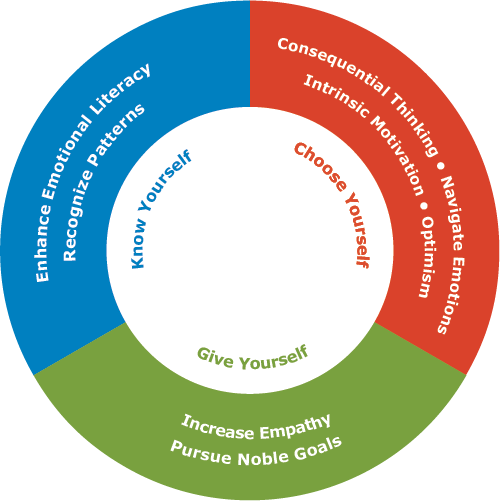
The Six Seconds Model of Emotional Intelligence: What It Is and How to Use It (+ PDF)
What is emotional intelligence and how do you practice it? Explore the Six Seconds Model of Emotional Intelligence to improve your life and relationships.

EQ Education News: Am I Doing This All Wrong? 5 Tips for Parenting Shy Kids
Emotional intelligence skills are learnable at any age. In this month’s newsletter we explore the emotion Shy among children

Getting Off the Trouble Train
“Have you ever found yourself in the middle a situation and you know it will to turn into a big mess? You can feel it slipping out of control… and yet you keep going. It’s as if you’re being pushed along this track; you know it’s going to lead to trouble, but it seems like there’s no choice.”

- 87 Ways to Be Kind and Loving - June 27, 2022
- 13 Tips to Reduce Stress & Anxiety During Covid-19 - April 8, 2021
- 6 Tips for Making the Best of Your Reality - October 12, 2020